
The gates of the World Cup circus haven’t even opened yet, and already alpine skiing has been shaken to its core. Before the new World Cup season officially begins on the last weekend of October in Sölden, Austria, the conversation is not about who will wear the leader’s bib, but whether the athletes will make it safely back to the finish.
The tragic death of Italy’s talent Matteo Franzoso, just one day before his 26th birthday, casts a long shadow. Franzoso crashed during training in La Parva, Chile, flying through a B-net and headfirst into a wooden fence. He was flown to Santiago with severe brain trauma and never woke up. And once again, the safety debate is open. It seemed to have been closed already, with new measures and gear changes introduced.
When Training Turns Fatal
Franzoso’s story is devastating but not isolated. We might think that training is a safer moment. What could be worse than a high-speed crash during a Hahnenkamm race? However, most fatal injuries in recent years have happened during training. Training courses often lack full netting, buffer zones, and any additional protection comparable to that of a World Cup-level event.
“On 90 percent of training slopes outside the World Cup circuit, I had to fear before every session that something terrible could happen,” said Sepp Brunner (AUT), the retired Austrian coach. He wasn’t exaggerating. Even in La Parva, a well-known camp for European teams in the southern hemisphere, safety nets were outdated. And this is the place where nearly all teams come to train at this time of year, as European glaciers lack sufficient snow, and speed training is impossible there.
Former racers, such as Marco Büchel (LICH), are calling for structural solutions. “It would be good for FIS to set up a fund where ski resorts and federations can apply for financing to implement the necessary safety measures.”
That fund might be essential. According to new FIS CEO Urs Lehmann (SUI), raising the safety of two dozen training slopes worldwide to World Cup standard would cost millions. “So there has to be a discussion about who contributes to those costs,” he said.
Until then, training remains a shadow zone. Speeds reach 120 km/h. Collisions with nets, fences, or even trees at half that velocity can be fatal. And statistics confirm the grim reality: more skiers die in training than on race day. Franzoso joins a painful list that recently included Italian juniors Marco Degli Uomini (18) and Matilde Lorenzi (19).
Faster and More Furious Every Year
“When I see the direction ski racing is heading, I’m glad I don’t have anything to do with it anymore,” Brunner admitted. Sepp Brunner is not alone with this concern. It is not just about the training conditions, although these need to be improved to prevent more fatal events. Alpine skiing is becoming faster, with more aggressive turns, and increased pressure on the athletes’ joints. Add more races during the season, tougher competition, and both equipment and terrain that match these changes, and you have a deadly mix.
Former downhill star Kristian Ghedina has pointed the finger at the equipment itself. “The skis are too fast, especially in the curves. They give you the adrenaline of speed, but the truth is that they’re too fast, and it’s time for a change.”
Last year, the safety debate arose after the toll of the races in the Italian venue of Bormio. The athletes blamed the organizers and the notorious terrain changes on the slope. The FIS officials blamed the equipment and the athletes who use more aggressive setups every year.
Markus Waldner (AUT), the men’s World Cup race director, warned that the whole gear is at fault. “The ski industry produces more and more aggressive equipment. It’s the ski boot, the plate, the binding, and the ski itself. We need to talk about the full package.” That aggressiveness, he argued, is directly linked to snow preparation. To make racing fairer for future start numbers, organizers hardened slopes to the point of creating ice sheets. “On these very icy conditions, a very aggressive setup can be fast. So, you see, we are turning the dial here.”
The result, according to Waldner and others, is not higher straight-line speed, racers used to hit 140 km/h in the ’70s, but far greater velocity and force in the turns, multiplied by unforgiving gear.
Yet not everyone agrees with Waldner’s reasoning. For many athletes, aggressive setups are not reckless indulgences but survival tools. They insist that if you soften the snow or dull the edges, the stopwatch punishes you mercilessly. In a field where margins are measured in hundredths, no one dares ski on “safe” equipment if it means being left behind.
The safety debate from last year resulted in some changes. No, the edges and ski length remain the same, but some issues were addressed, bringing more controversies in tow.
New Rules, New Season
FIS has issued a package of new safety measures for the 2025/26 season. And as with the mandatory airbags introduced last year, it sparked a heated debate, which will undoubtedly continue.
- Ban on carbon shin protectors and rigid inserts. No more stiff carbon shells inside ski boots. Only soft padding is allowed.
- Mandatory cut-resistant undergarments. From the iliac crest to the boot top, athletes must wear certified fabrics to protect against ski-edge lacerations.
The Carbon Controversy
Carbon shin protectors became the hottest topic last winter, especially after Cyprien Sarrazin’s (FRA) crash in Bormio. Critics argued that the stiff inserts made skis react too quickly, amplifying every vibration and increasing the risk of crashes. Austria’s Alpine Director Herbert Mandl was blunt: “When it comes to performance, everyone will choose the faster option.” Which is why he refused to let athletes decide for themselves.
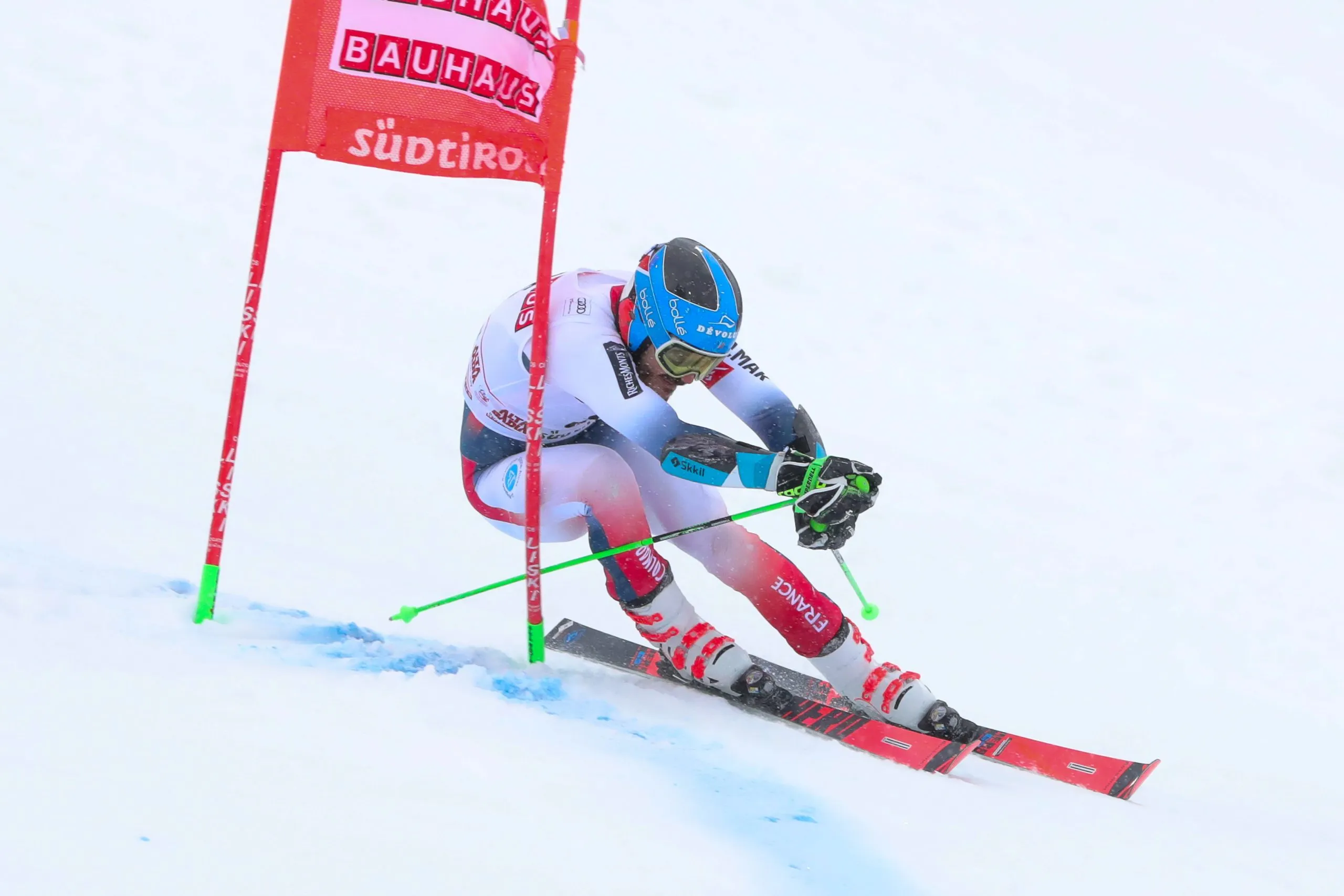
FIS claims research with the University of Innsbruck confirmed the risks: sharper edge engagement, less forgiveness, and more injuries. Hence the ban.
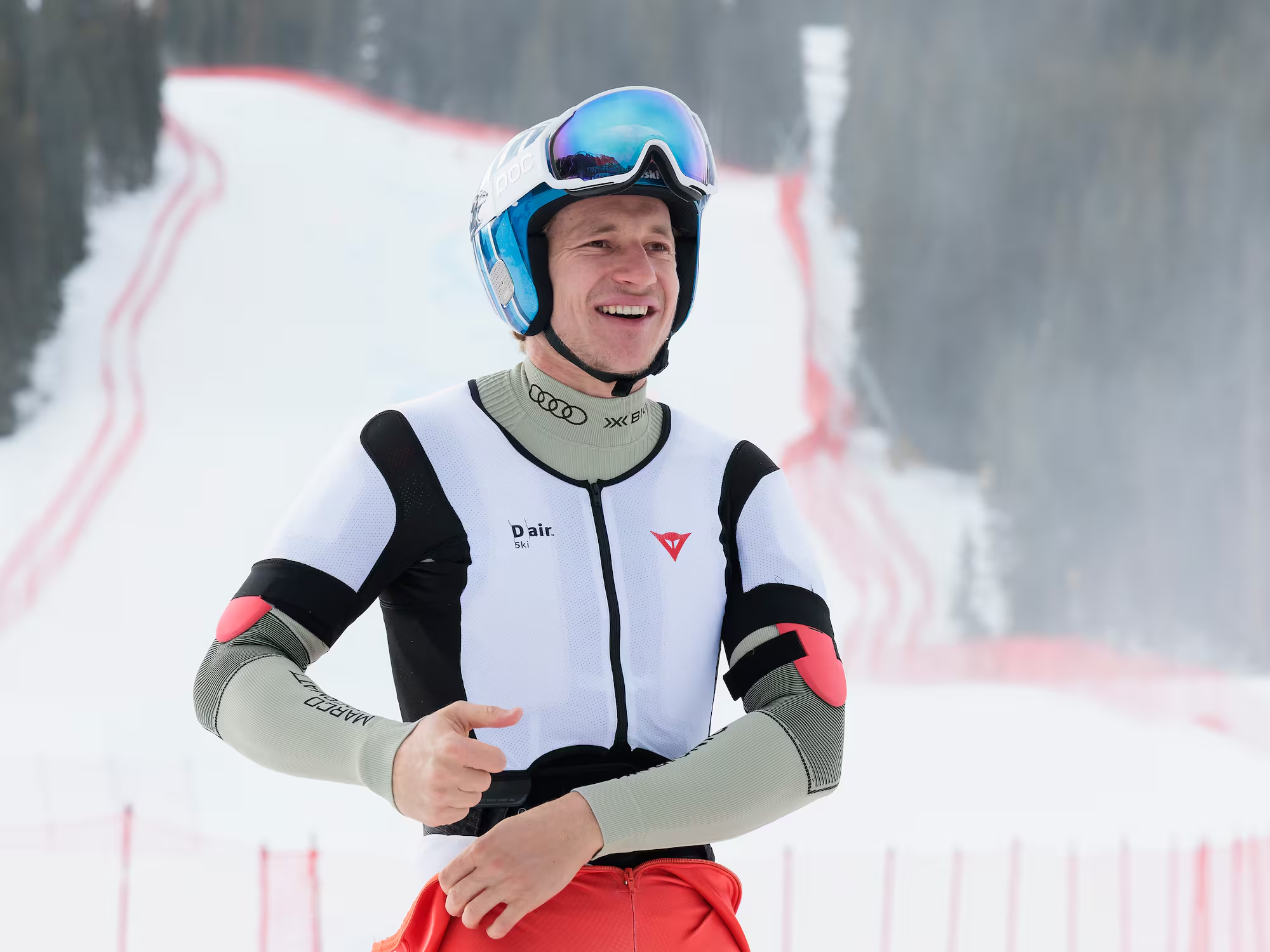
But not everyone is convinced. Marco Odermatt (SUI), reigning king of the World Cup, has worn carbon supports his entire career to manage shin inflammation. “Some athletes race with a kidney belt, Lindsey Vonn came back with a knee prosthesis, so why should we not use shin guards?” he asked. He called the ban a “huge mistake” and warned it might limit his ability to compete.
- Related post: The Airbag Controversy
Other athletes, like Christof Innerhofer (ITA), swear by them: “It gives me security. I feel much more comfortable. Especially when it hits, it gives me stability in the ski boot.”
Austria, which has struggled in men’s speed races, led the calls for prohibition. Switzerland, home of Odermatt, sees politics behind the decision. Once again, safety debates bleed into federation rivalries.
Cut-Resistant Layers
Cut-resistant underwear is meant to protect skiers from injuries like the one that nearly ended Aleksander Aamodt Kilde’s (NOR) career. But his crash and the nature of his injury are not isolated on the tour. Sharp ski edges have sliced through suits and skin countless times.
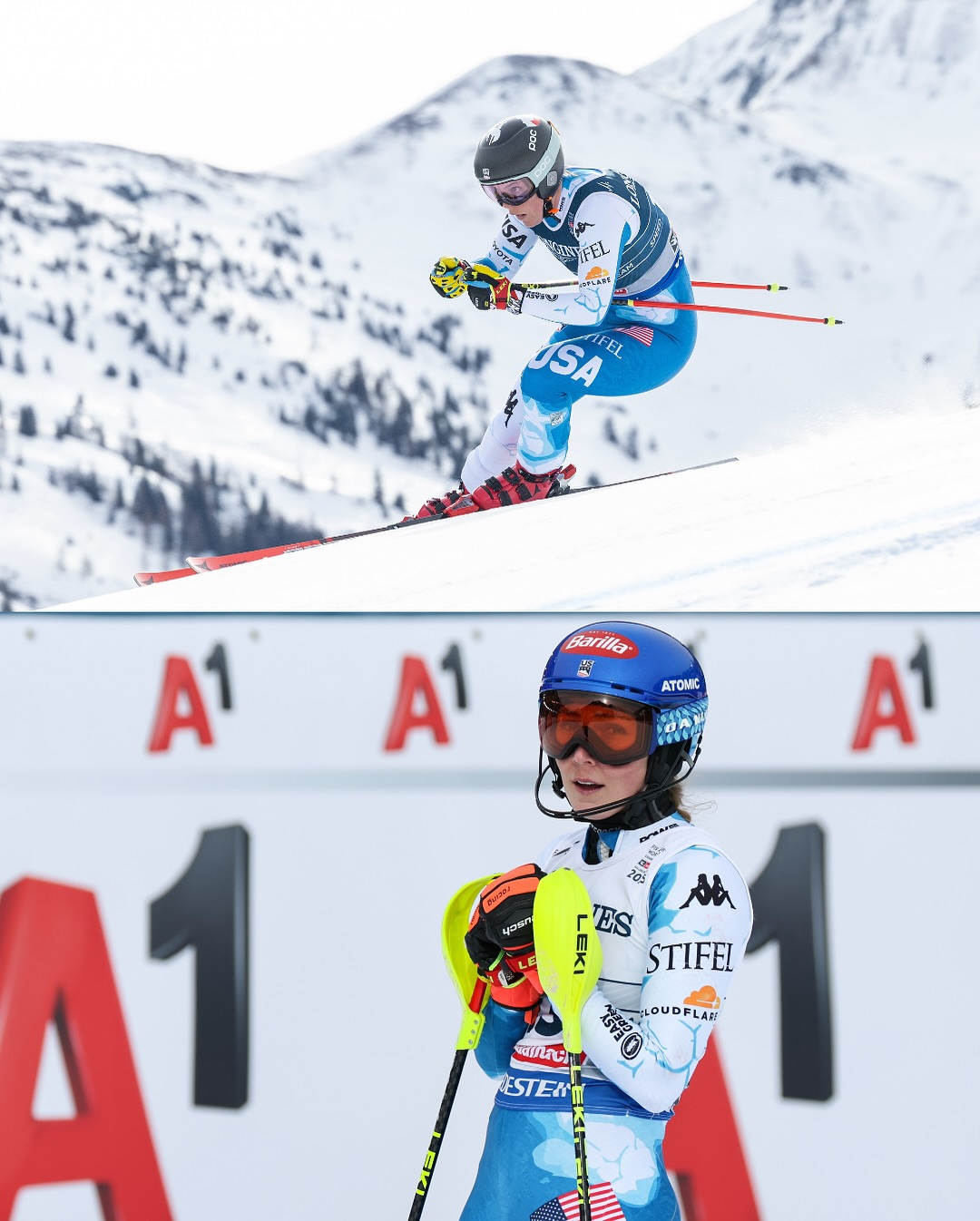
Athletes like Breezy Johnson (USA) have already credited the gear with preventing serious injury in training. “A ski edge cut through my pants and race suit but was stopped by the undergarment underneath,” she recalled.
- Related post: Women’s Downhill Review: Deserving American Joy
Others, like Mikaela Shiffrin (USA), are cautious: “It’s cut-proof, but not necessarily puncture-proof. Maybe we need some kind of padding system.” Shiffrin refers to the injury she suffered last year that nearly cost her life, and definitely cost her the season, as a sharp object (probably a pole tip) punctured her underbelly. Cuts are more common than Shiffrin’s unique injury, but her point resonates.
- Related post: Shiffrin Out Due to an Unusual Injury
There are also concerns about cost, comfort, and mobility. The gear is expensive, and smaller teams from non-alpine nations would struggle to find funding for it, which makes the competition somewhat unfair. As for comfort and mobility, this is the same issue racers voiced last year regarding the compulsory airbags. One manufacturer and one technology mean that the gear might not fit perfectly, cannot be custom-made, and some individuals may be disadvantaged. Another issue is that the racers are slower with the equipment, but that loses relevance when everybody wears the same.
Athletes vs. Institutions
The 2025/26 season begins not with clear snow but with blurred lines. Athletes argue for freedom of choice; federations impose rules in the name of safety. Both sides use the same language. Both sides discuss fairness, protection, and safety, but each side clearly interprets these words differently.
Is a carbon shin guard a form of medical support or a performance cheat? Is a cut-resistant layer safety gear or a financial burden on smaller nations? Who should pay to make training slopes safe: rich federations, local resorts, or the athletes themselves?
The answers are as tangled as the B-nets that failed to hold Matteo Franzoso.
The Neverending Debate
The safety debate is as old as Alpine sport itself. And it is not limited to skiing. Sport has always wrestled with the line between innovation and risk. In Formula 1 and MotoGP, each deadly crash forced changes that saved future lives. In ancient Greece, boxers debated the thickness of their gloves; in chariot races, riders surely quarreled about the materials used for their horses’ horseshoes. Thus, we might argue about underwear, airbags, and shin guards, but new debates will still arise next year, and new measures will be implemented; however, none of these will ensure that everyone gets down the slope safely.
Because the battle is never-ending. Today, athletes race in superbly safe conditions, with nets, buffer zones, and airbags, all of which enhance safety. However, they also race at higher speeds, on icier terrain, with greater forces threatening their joints and bones during the turns. For every safety measure introduced, another unit of speed and aggressiveness is added to the mix. It is like when software developers race with hackers to introduce safety updates, or the anti-doping agency tries to keep up with new performance-enhancing drugs, or the DEA struggles to close smuggling routes. You close one route, another opens.
However, we still have to try.
Looking Ahead
And so we return to October in Sölden. The Rettenbach glacier will host the first giant slalom of the season, men and women alike. The crowds will cheer, the cowbells will ring, and the stopwatch will once again rule our attention.
But beneath the surface, this year’s opening carries a heavier question: can the sport change fast enough to keep its athletes alive?
The new season will crown champions, deliver heartbreaks, and carve its stories into the snow. Especially this year, as the Olympic season opens its gates. Let us hope the safety debate does not overshadow the thrill; let us hope for as few injuries as possible.