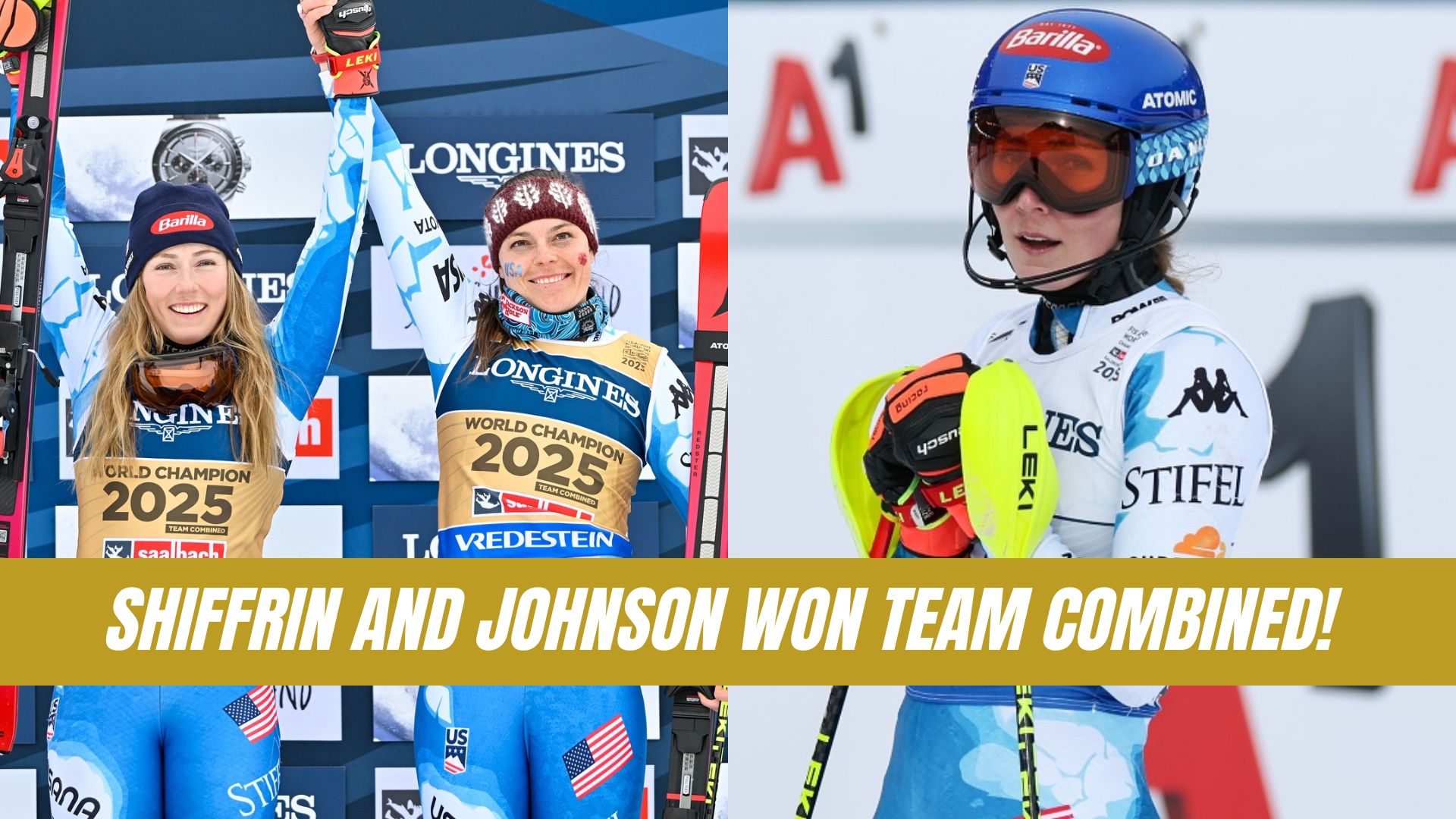
Yesterday, fans watched a brand-new team-combined format that replaced the traditional alpine combined event. This event was widely anticipated as a novelty, and the question of who would pair with who savored the media coverage.
Why Team Combined
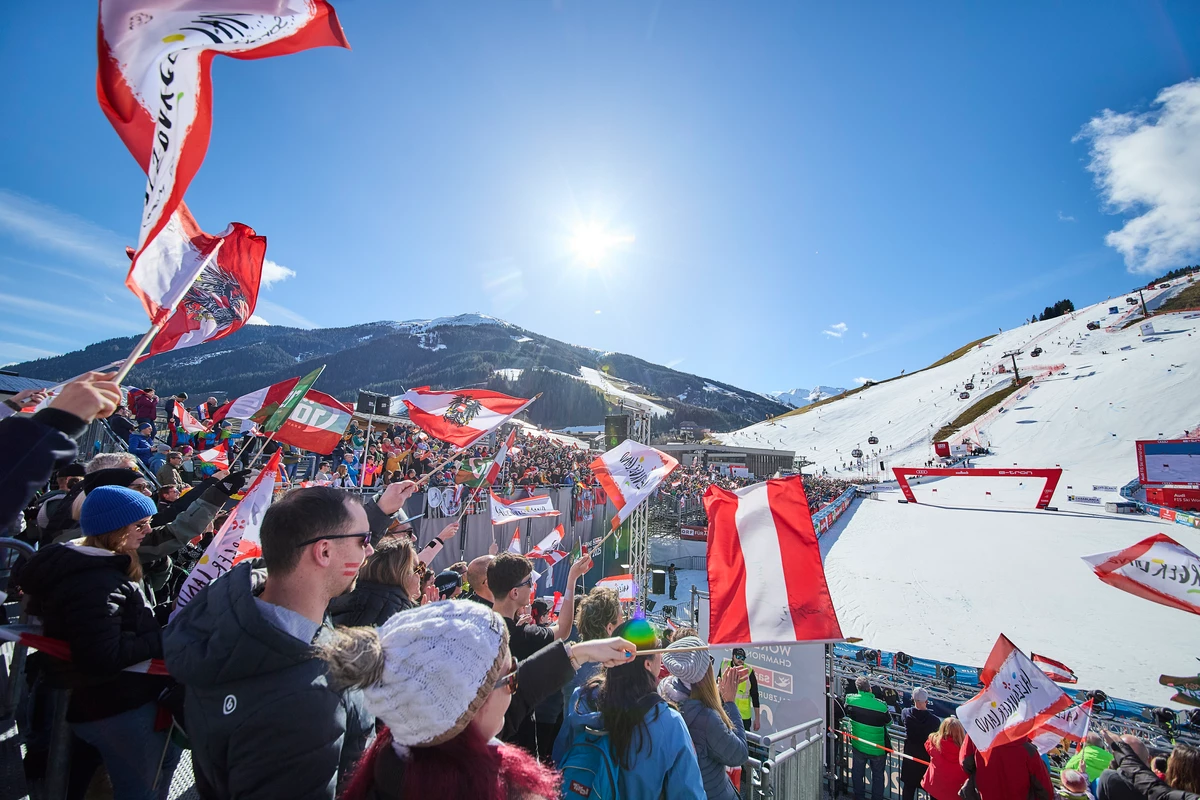
Alpine combined was one of the oldest alpine skiing disciplines, but as the specialization of professional athletes advanced, it lost its appeal. Organizing both downhill and slalom on one day turned difficult for the venues, and as downhill rules stated that racers must enter training sessions, racers who do not race downhill found it too demanding in the packed calendar. As fewer combined events appeared, fewer racers specialized in them, as training these two disciplines was physically too demanding with modern requirements. Being competitive in the slalom was becoming nearly impossible for pure downhillers, and for pure slalom racers, participating in the downhill posed an unnecessary risk.
Alpine combined remained only in the schedule of big events like the World Championships and the Olympics. The last straw that broke this discipline’s back was the last Olympic games, where downhill racers competed in the downhill run and even publicly stated that they would not compete in slalom; they only used the race to have additional training runs for speed events.
FIS decided they needed to change the format and came with the team combined. Now, downhill racers don’t need to train in any other discipline, and slalom racers do not have to risk on the downhill track. Furthermore, the nervousness of the downhill racers waiting for their teammates to either waste the lead they created or, on the other hand, save them from their mistakes adds another angle to the discipline. The athletes have expressed that they love racing in the team for a change.
The Team Combined Opening
We believe the first event showed everything this discipline would later be famous for. Fans waited impatiently for the coaches to announce the teams and spent their time building their dream combinations on social media. Lindsey Vonn kept the press busy announcing her dream combinations without asking her possible partners first, which caused controversy. Coaches mostly avoided calculating because those calculations were difficult to make. Most teams let the athletes decide to ensure the right chemistry in the team.
The Downhill
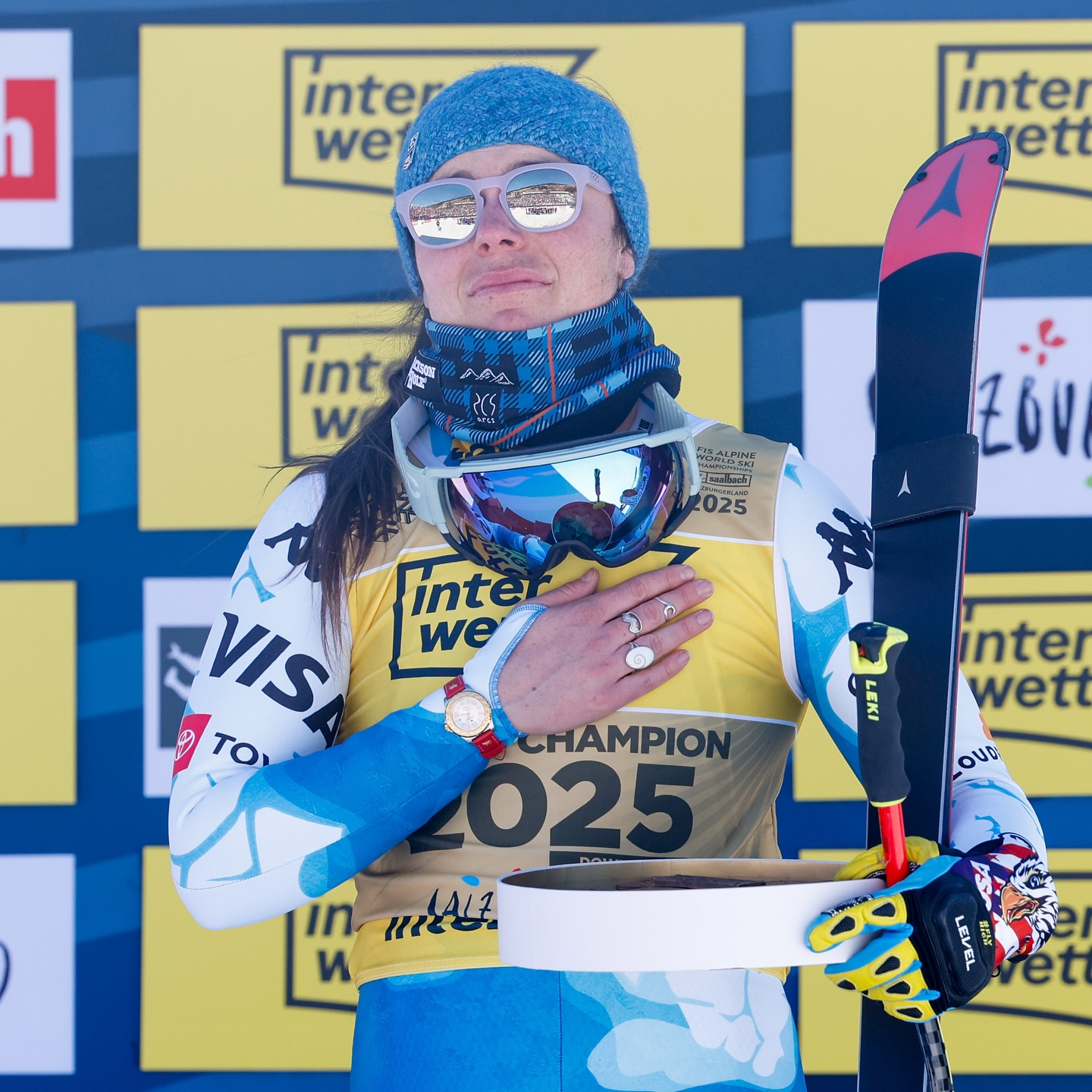
The downhill track was the same as that of the pure downhill competition, so it should have suited those who were successful on Saturday. So, the biggest surprise was the stellar performance of the German skiers. Kira Weidle-Winkelmann and Emma Aicher performed very well in this championship, but their lead on the rest of the field was beyond the experts’ expectations. Only three women managed to split the Germans or even get before them. First, Austria’s Mirjam Puchner, the silver medalist from the downhill, was faster than Kira Weidle-Winkelmann, and then the Americans came. The downhill World champion, Breezy Johnson, was 10 hundredths faster than Kira, and Lauren Macuga conquered the track with a final 0,23-second gap on the second Emma Aicher.
- Related post: Women’s Downhill Review: Deserving American Joy
The Slalom
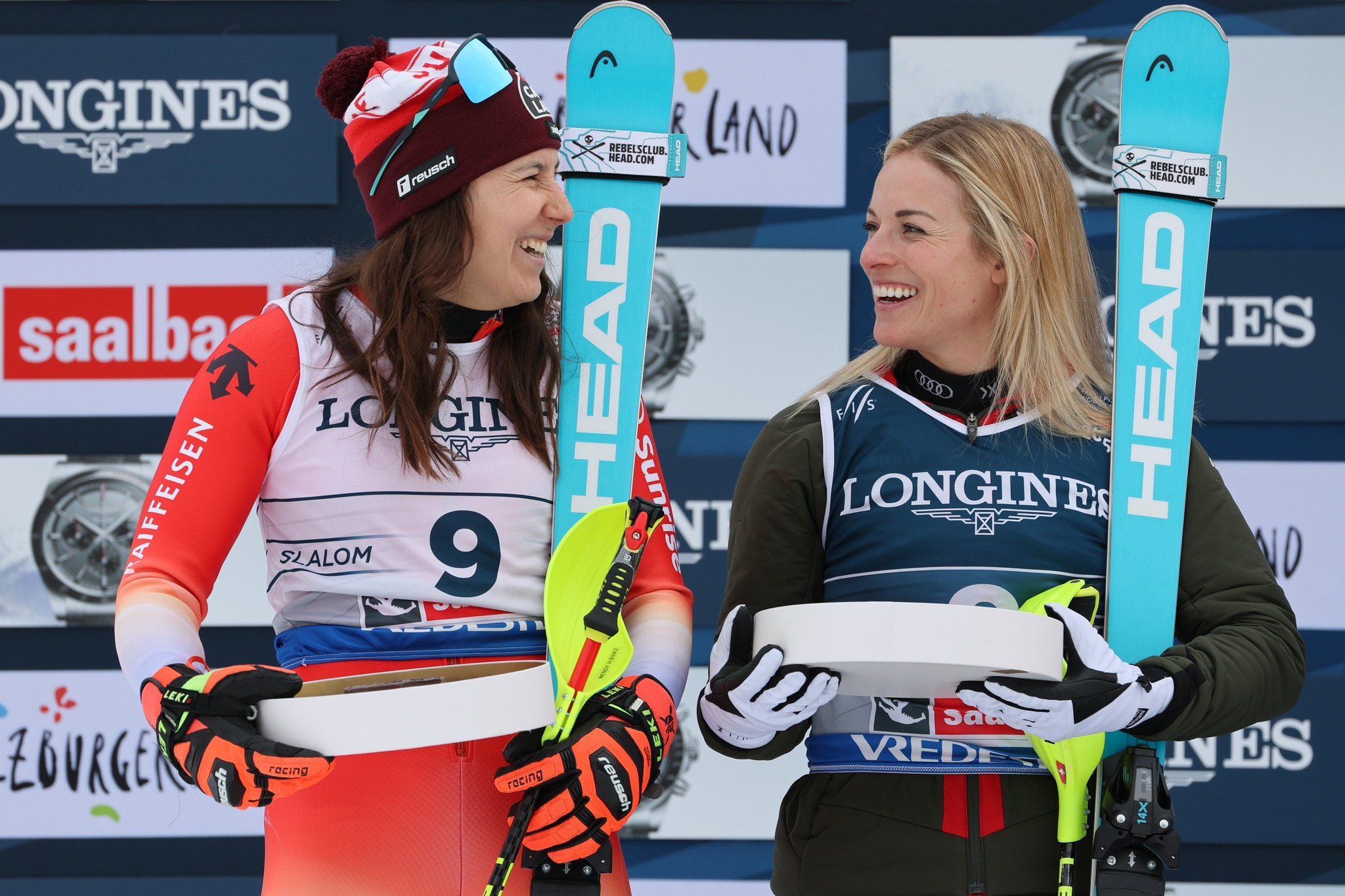
In the slalom finish area, the downhill racers waited nervously with the rest of their teams for support. Most of them were visibly unhappy when things were out of their hands depending on the skills of their colleagues. The slalom skiers went down in reverse order, and for a long time, there was no sensation. Then, Wendy Holdener (SUI) appeared as a vision from another world. Her partner, Lara Gut-Behrami, did not like the downhill track and only finished twelfth. So, it was up to Wendy to save what could be saved. Her run made all the other racers look like amateurs, and she put the Swiss team in a provisional gold medal position. Nobody could get close; only Katharina Truppe used Stephanie Venier’s advantage to get the Austrian team into the provisional second position.
The Dream Team
During the World Championships, Mikaela Shiffrin tried to remain low under the radar of media and fans, focusing on her recovery. When Lindsey Vonn told the press she wanted to pair with Shiffrin for the combined event, Mikaela said she would not compete in the team event. But the day before the actual race, she changed her mind. She would not race in the giant slalom, as her form is not where it should be for such a competition, and now she could try the team event. She accepted the offer from her childhood friend Breezy Johnson, and another dream team was born.
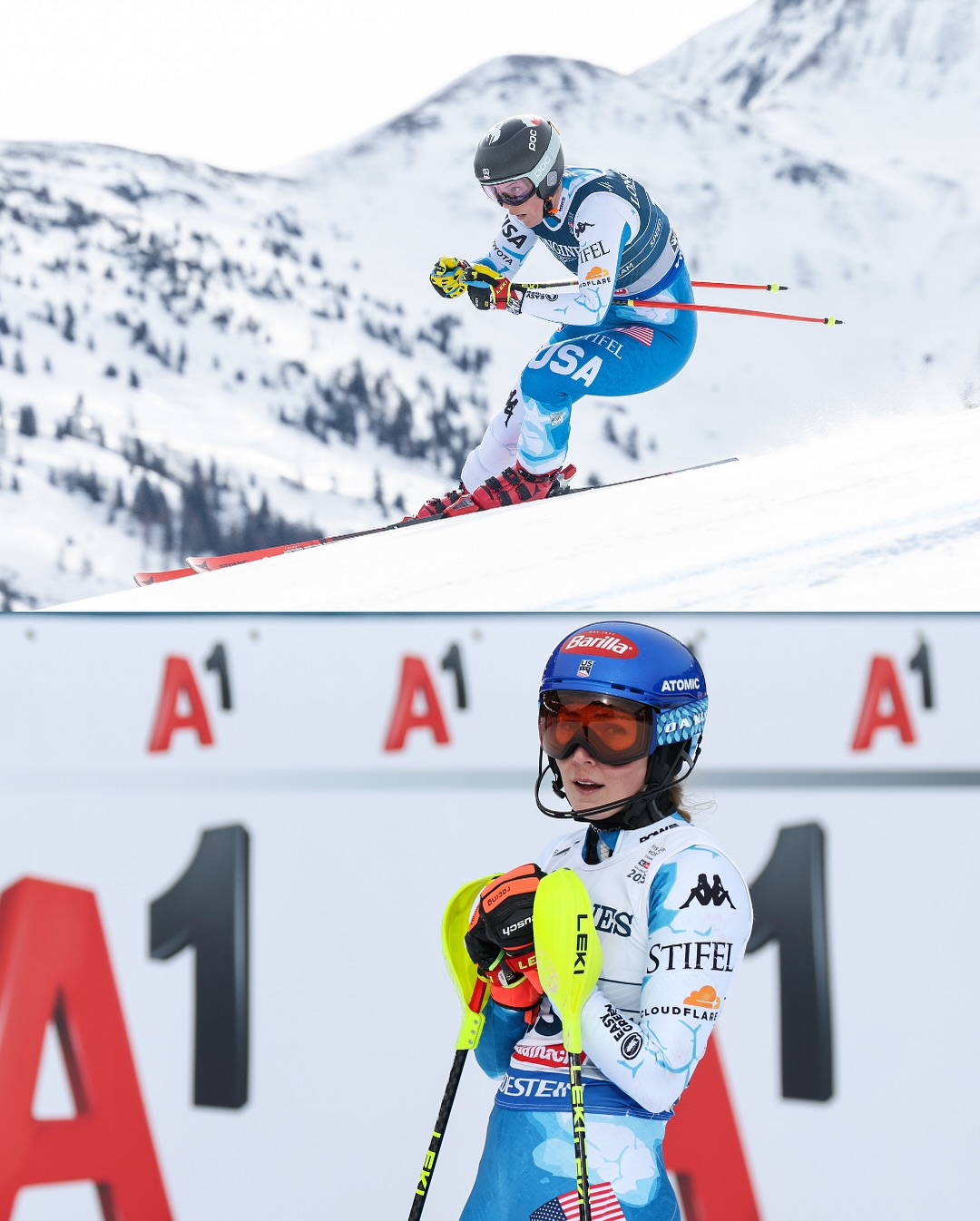
Shiffrin toppled the Swiss from their golden position with her run, using the advantage Johnson created. She was slower than Holdener, but Johnson was much faster than Gut-Behrami; that is the charm of the team competition. Germany’s Lena Dürr did not finish the race, thus failing to use Emma Aicher’s advantage; Katharina Liensberger only got the Austrian team to the fifth position.
With her brave performance, Paula Moltzan (USA) tried to use her teammate Lauren Macuga’s lead but could not. The three Americans in the finish consoled her, neither Breezy Johnson nor Mikaela Shiffrin, began celebrating before hugging their beaten friends, showing the true spirits of champions.
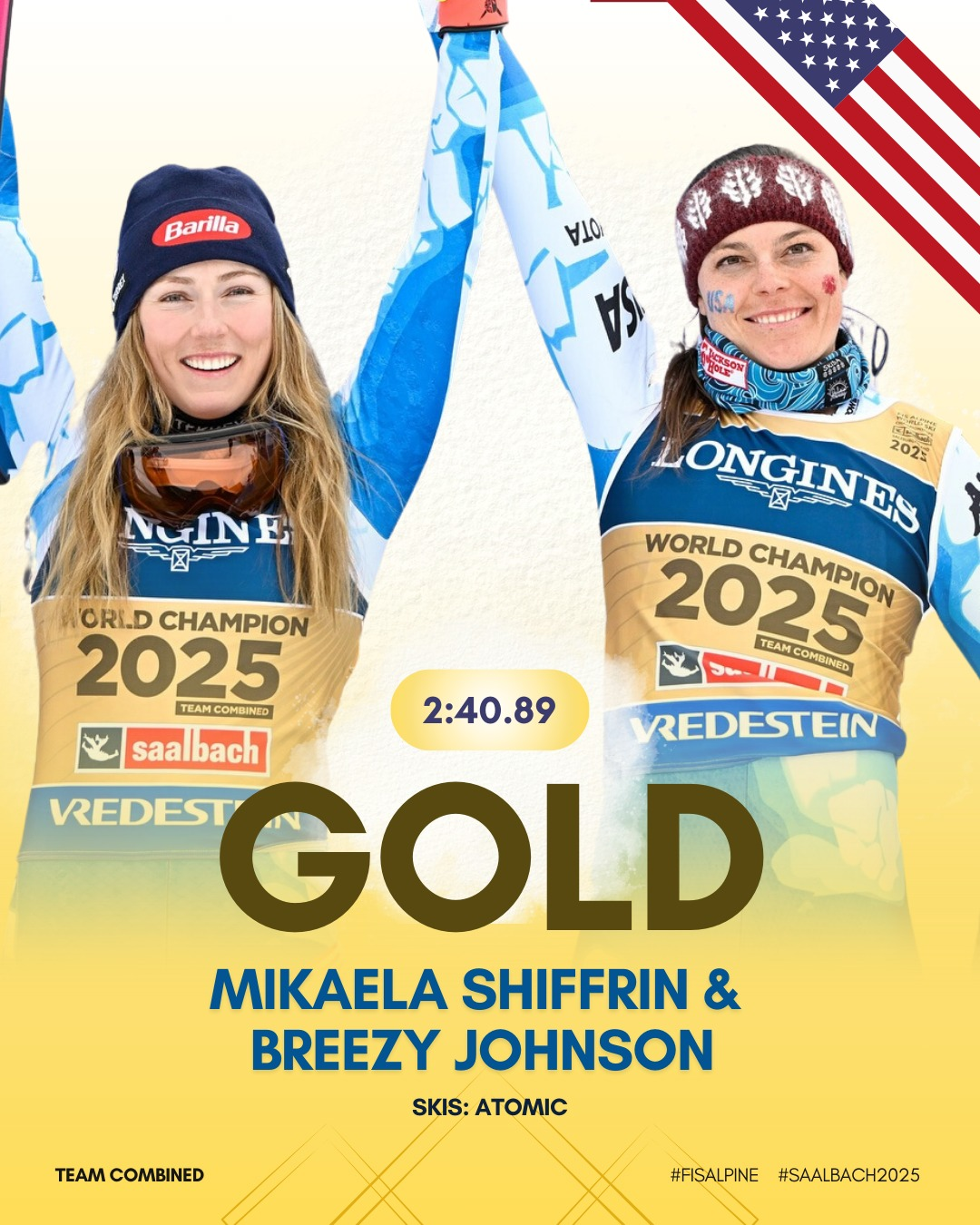
So, the combined event added another top performance for the Americans and one medal for the Swiss and Austrians. Today, the men’s team combined will be on its way, and if it is half as thrilling as the women’s, fans are in for a treat from the FIS. This format is superb.