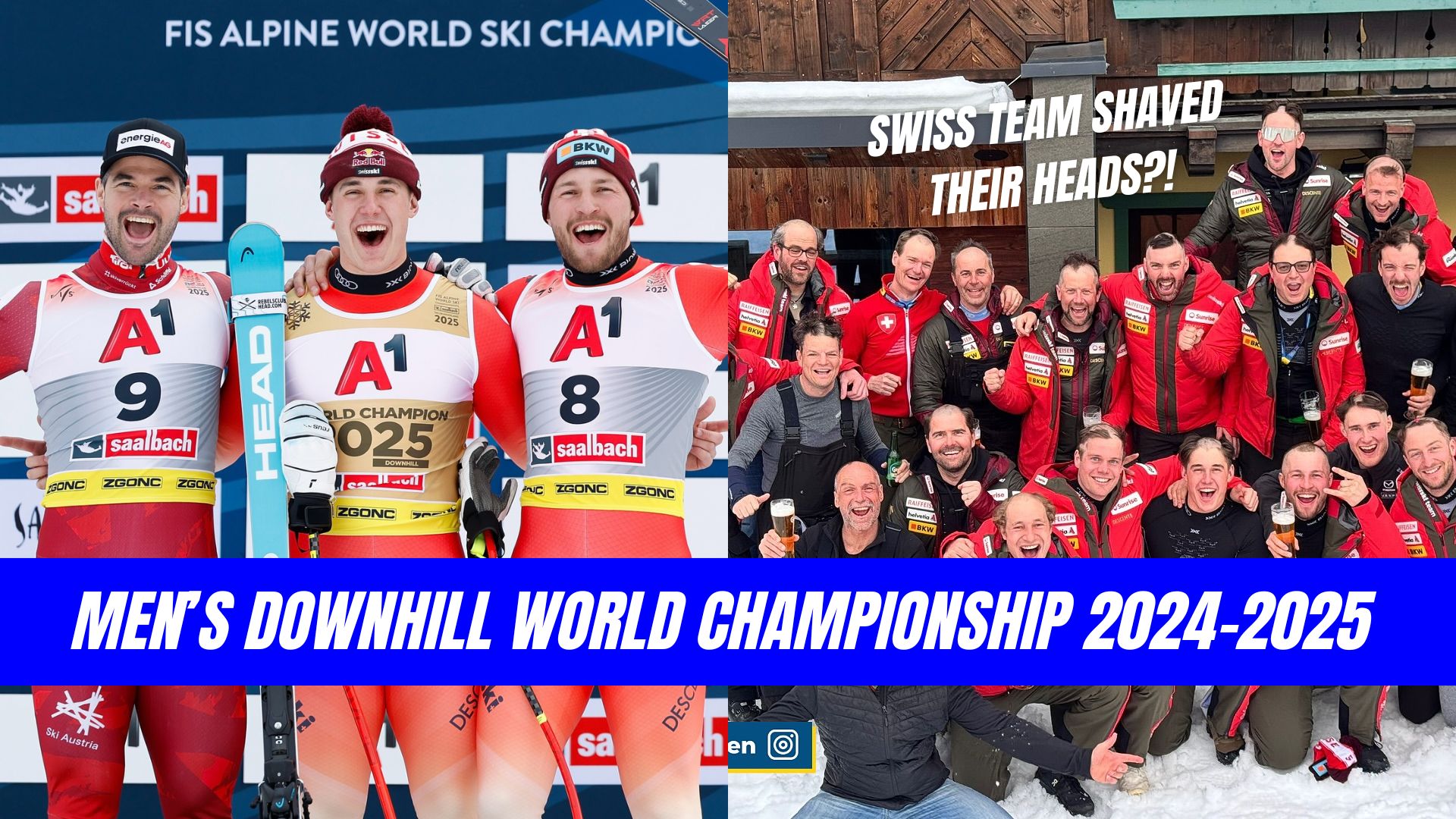
Men’s downhill was challenging but in a good way. The organizers managed to prepare speed tracks that required the best from the athletes yet were not dangerous. We rarely saw devastating crashes from the best, yet only the best performance could get you the medal, as the course was tricky. Thus, this course is worth the World Championships. But who conquered it?
Men’s Downhill
Before the downhill, all five Swiss athletes were counted among the favorites. The question seemed not to be if a Swiss would win but which one. Only Vincent Kriechmayr (AUT), in the end, had something to say to that.
The track demanded a perfect racing line from top to bottom, as there was no room to make up for mistakes. As the snow was a little softer due to warmer weather, managing the terrain underfoot turned even more challenging. The prerequisites for a perfect downhill run are a soft touch, an ideal line, and courage; these World Championships prove that.
After Nils Allegre (FRA) was the first to demonstrate what a perfect line means, Alexis Monney (SUI) did not let him enjoy the red chair for much longer. Monney’s run was wild; he made mistakes, but those mistakes did not slow him down, and he kept going even when he nearly fell a few times.
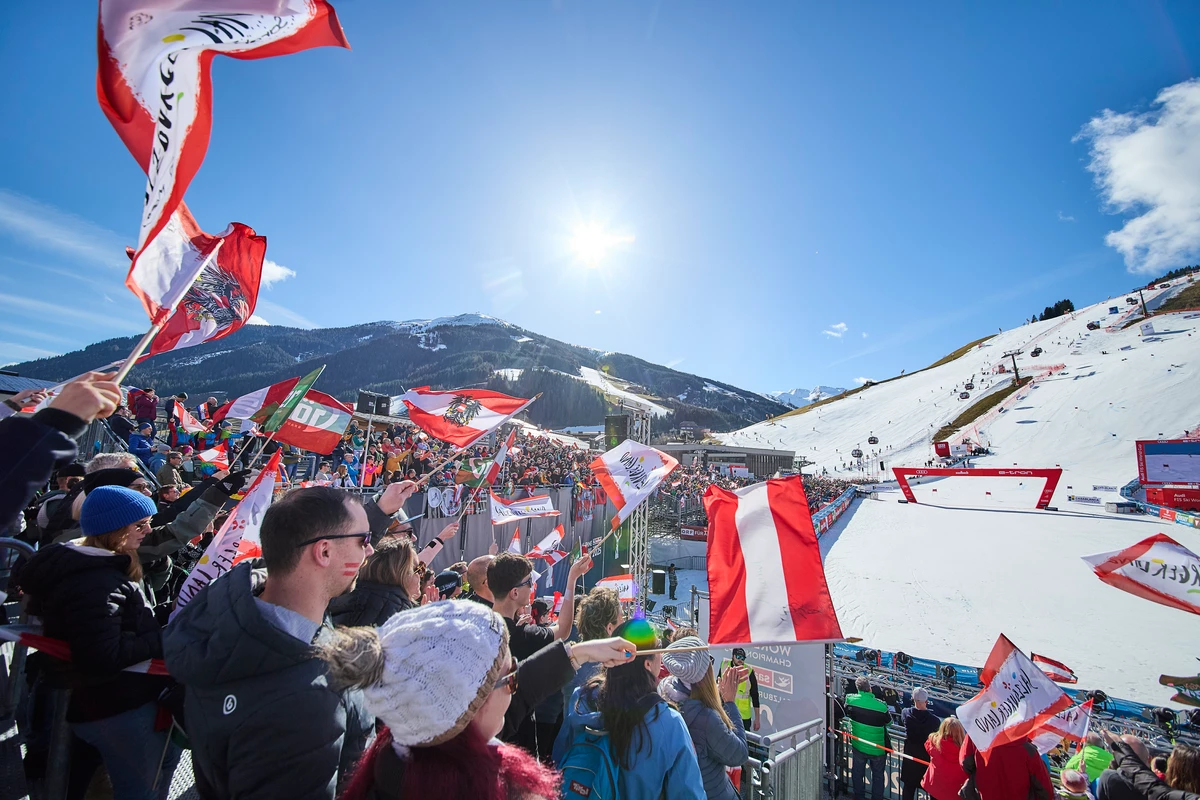
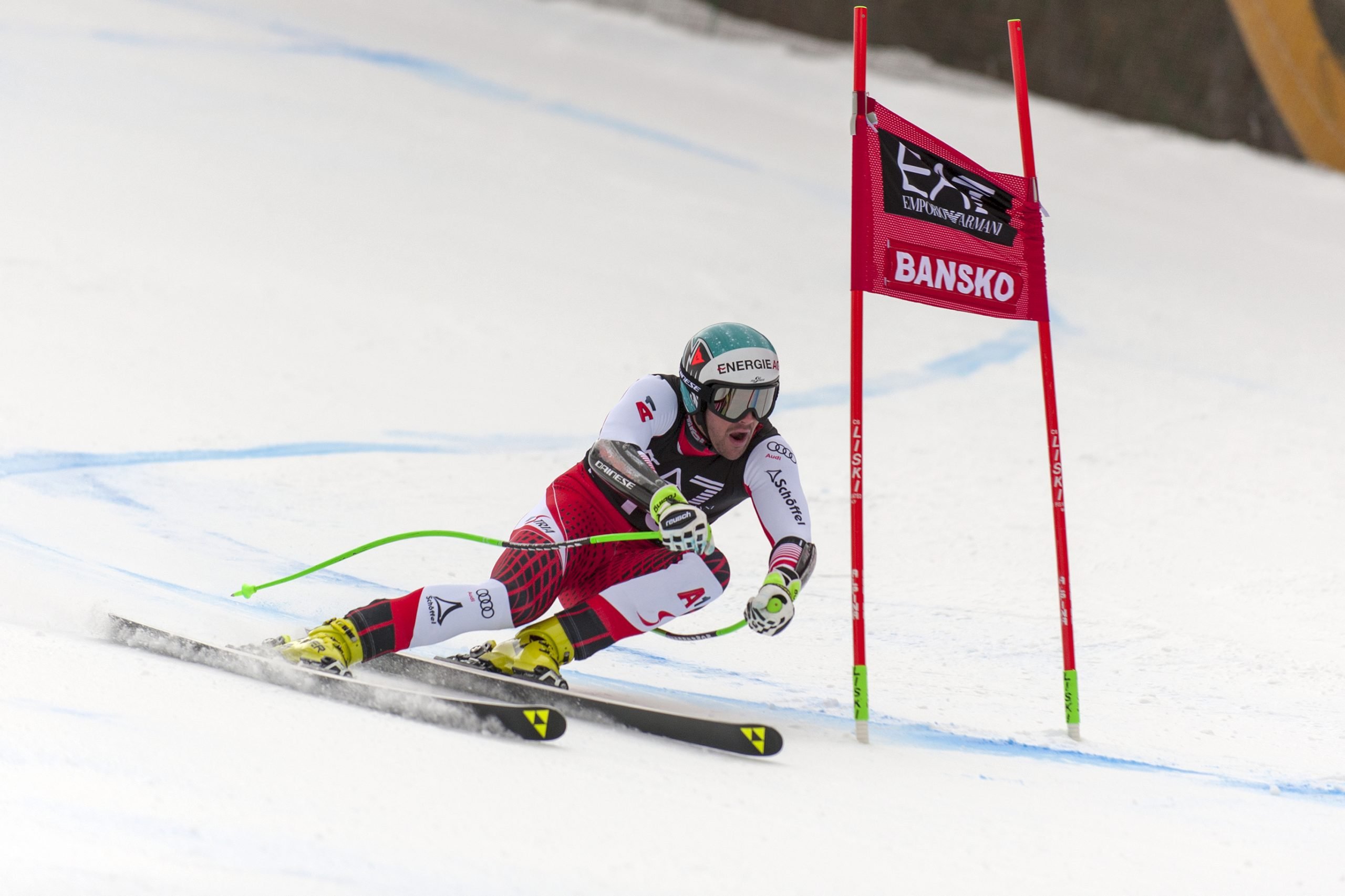
Vincent Kriechmayr (AUT) was disappointed with his fourth place in the super-G. After his crash in Wengen, he worked hard to recover his injured knee, and a week ago, nobody was sure if he could ski at all. But Vincent’s dream was to win medals in front of the home crowd. This course seemed to have been built just for him, as silky-smooth touch and perfect line is what he is famed for. Kriechmayr nailed the first jump like nobody else, and his upper part performance was beyond measure. The bottom section was a little scrappier for his high standards, but still, he came home with a massive green light greeted by the crazy home crowd that roared at every green split during his run.
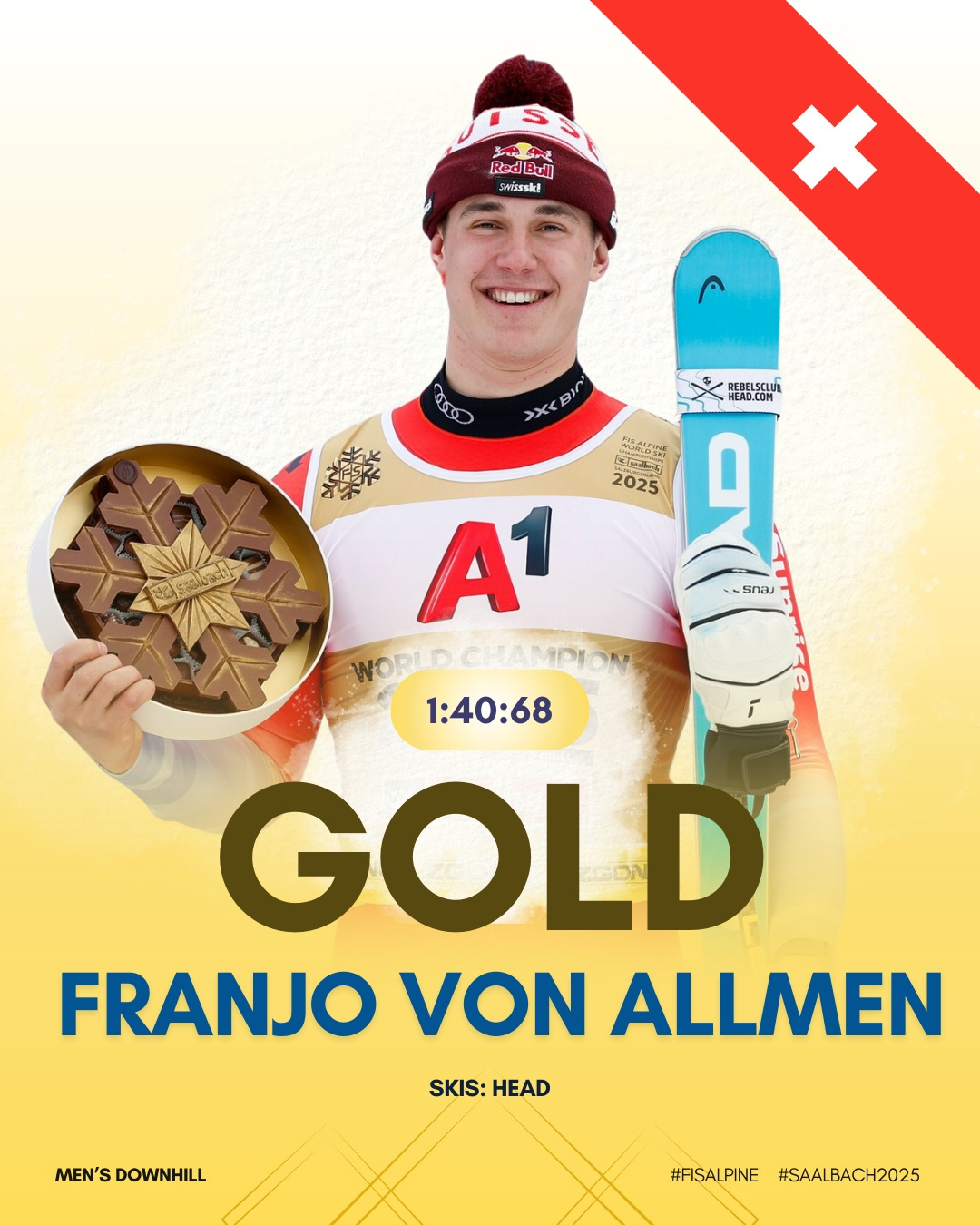
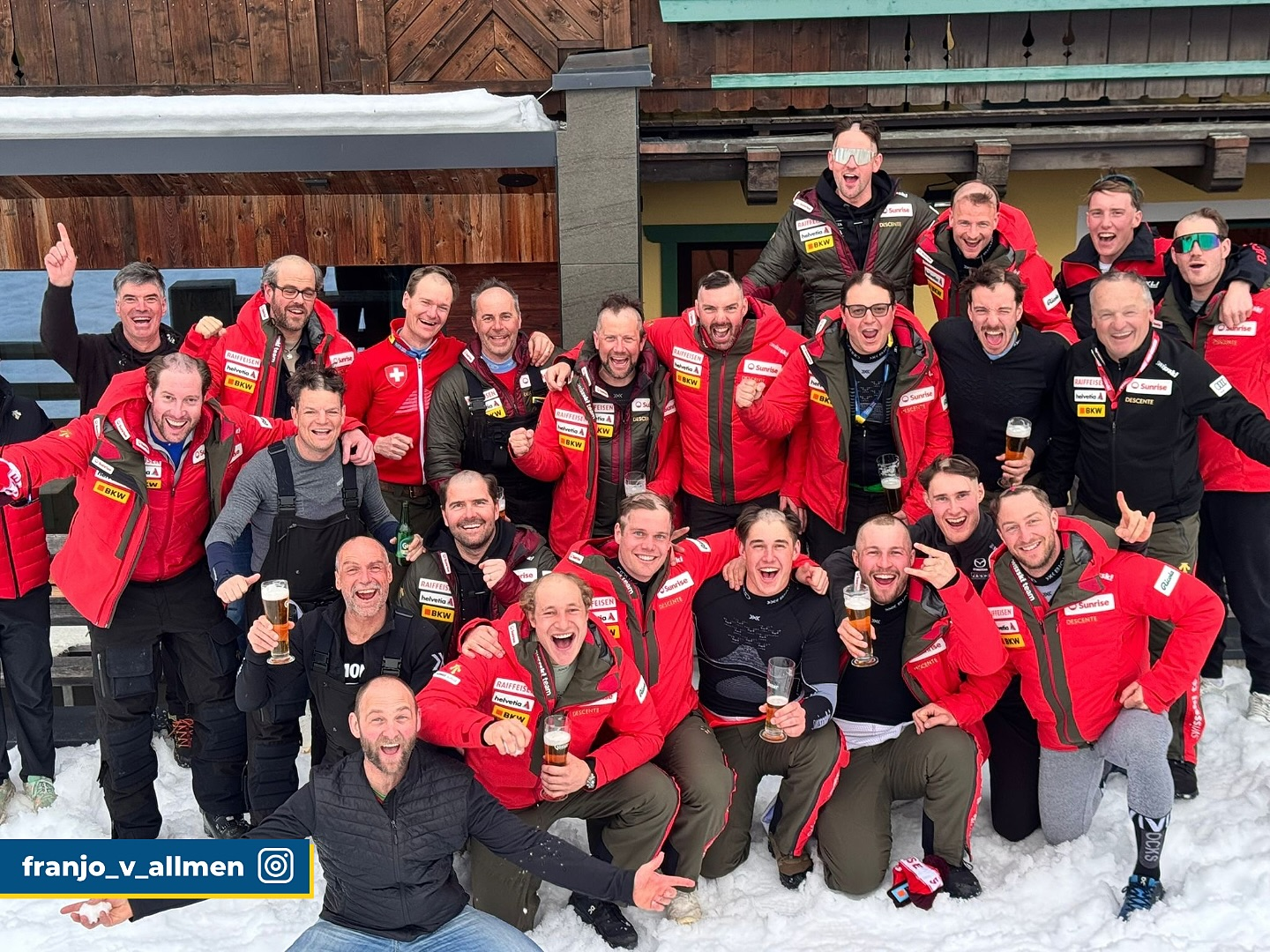
But Kriechmayr’s joy was short-lived because another Swiss wanted the title. Franjo Von Allmen was more courageous than smooth, yet his mistakes and near crashes did not slow him down. He took risk after risk and toppled Kriechmayr to win the gold.
The podium performance was out of the league of everybody else who came down. There simply was no room for improvement. Not even Marco Odermatt could do that. So, gold and bronze go to Switzerland. However, Vincent Kriechmayr said that after his injury, this silver was worthier than gold to him.
During the celebrations, the Swiss team played the role of rockstars (or clowns, depending on whether you like them or not) of the ski circus. They honored their winner by partially shaving their heads, a tradition Monney started in Kitzbühel. Let us see how much hair remains on Swiss heads at the end of the week.
What Comes Next: Team Combined
The second week of the World Championships belongs to technical disciplines. First, there will be a combination of the two. After today’s rest, first women and then men will participate in their team combined event. A giant slalom will occur on Thursday and Friday, and a slalom competition ends this week on Saturday and Sunday.
Let us first focus on the combined, as this is an entirely new format. The rules allow up to four teams from one nation to be on start, but each athlete can compete only once. The duo will draw their bib number and race under the same number. First, the downhiller will race; if she or he finishes, her or his colleague will race in the second run, which will be a slalom. The first 30 will start in reverse order, as was traditional in the team combined before the rules changed lately.
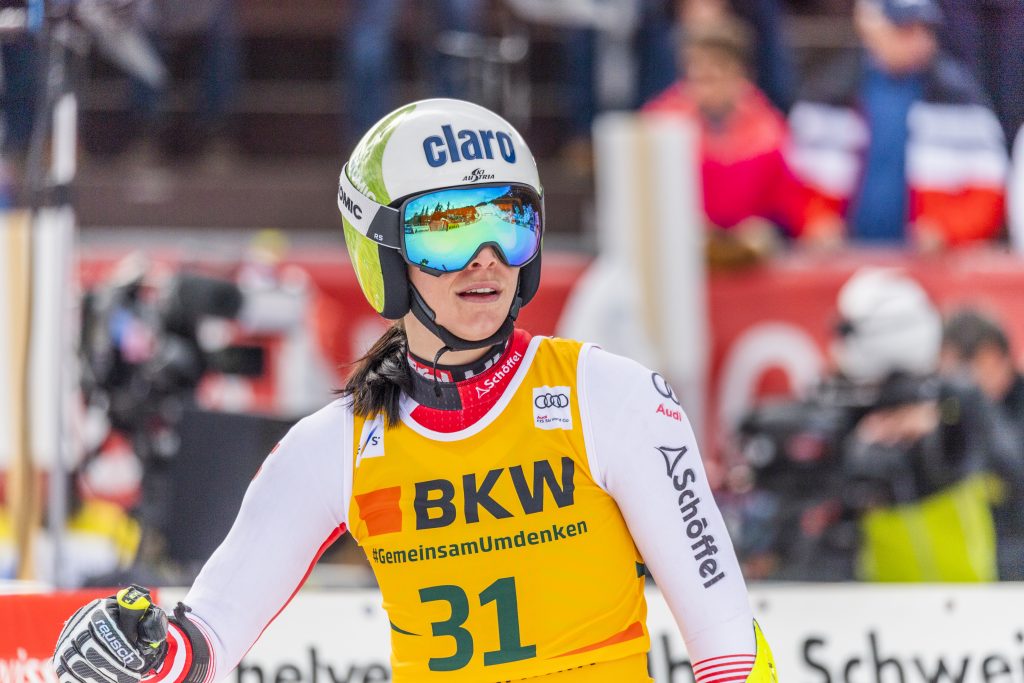
Most nations have not yet announced their teams for the women’s competition. The Austrian pairs are: Stephanie Venier + Katharina Truppe, Mirjam Puchner + Katharina Liensberger. Some nations, like the Swiss or the Americans, have plenty of names to choose from. But in some cases, the matter is straightforward. We can hardly imagine a combination different from Ester Ledecka + Martina Dubovska for the Czech Republic. However, some nations, like the Italians, will have trouble pairing their speed queens with technical specialists, and Sweden´s Sara Hector must look hard to find her match amongst the speed skiers.
This format is fantastic, although it favors the big teams and traditional alpine nations. But that is the nature of this sport. You must have mountains and skiing traditions to help young talents and money flow into the sport.