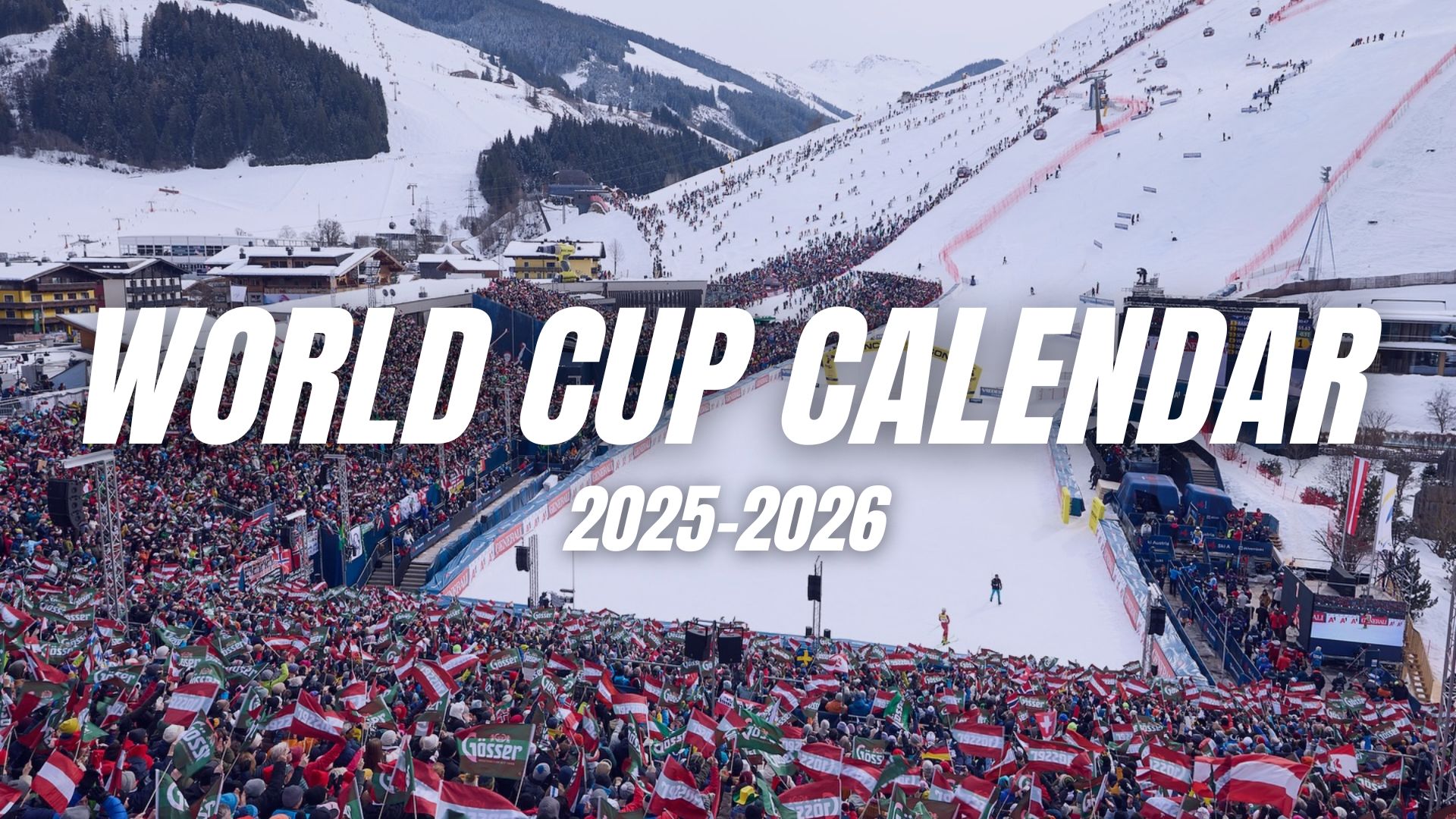
Just a few days ahead lies the beginning of the season. Sölden, the Rettensbach glacier with its brutal gradient and unforgiving ice, awaits the athletes, and they’ll all be there. The healthy ones, at least. To test their skills, courage, and equipment. To see how well they trained, what needs to be improved, and to get a first glimpse of their opponents’ form.
During the long pause after the opener — longer for the speed racers — there will still be time to fine-tune the rest. So, what awaits us this season?
An Olympic Shadow Over the Season
The Olympic season is different. Racers risk less to avoid injuries or risk more to squeeze into their nation’s qualifying quota. The Games are special: everyone tries to time their form for February, skipping races when necessary. For some, especially the veterans, World Cup points don’t really matter when Olympic medals are in sight.
The federations play along, testing various athletes because they’ll have to make hard choices. Bigger nations like Switzerland and Austria may have ten top-class racers, but they must limit the number to four per gender and discipline, while still staying within their overall national quota. That will lead to tough choices and heartbreaking moments throughout the tour, leading to February.
The Classical Beginning
But it’s not just about the Olympics — the whole circus gets moving in a few days. We have new venues, old classics, and some changes.
In November, there’s nothing new under the sun. The traditional battle for a reindeer in Finnish Levi follows Sölden. A few years ago, Austrian Gurgl joined the scene, giving slalom racers another early chance to compete. The speed racers, though, remain idle until the North American leg.
In recent years, organizers have attempted to incorporate early-season speed races on the Matterhorn–Cervinia piste, which was built specifically for this purpose. Twice they tried; twice the weather said no. When ecological concerns entered the public debate, the FIS decided to cancel the whole project. So, the speed racers will once again have to wait until the end of November for their first races.
The North American Question
Traditionally, the World Cup circus moves to North America at the end of November. It makes sense — conditions there allow for proper speed races, and it is a World Cup, not a European Cup. Yet every year this raises questions about ecology, economy, and fairness. Traveling an entire team across the ocean is costly and challenging for smaller nations. Not to mention the jet lag and its toll on athletes’ performance.
However, this year’s American leg makes sense. The athletes move once — and then back. We’ll have a unique opportunity to see both men and women race on the same weekend in Copper Mountain, before they part ways: women heading to Tremblant, and men to Beaver Creek. It means that from the start of the season until Copper Mountain, men and women will share the same venues for four weekends. Great news for skiing couples like Michelle Gisin (SUI) and her boyfriend Luca De Aliprandini (ITA).
The Christmas Leg
December always brings a festive rhythm to the calendar. We’ll visit the classic venues: St. Moritz for the women’s speed events, the brutal men’s technical races in Val d’Isère, and the pre-Christmas staples of Val Gardena and Alta Badia. A relatively new addition is the women’s night slalom in Courchevel, plus an entirely new set of women’s speed races in Val d’Isère.
The Olympic preparations forced some changes. The legendary Bormio downhill, usually held between Christmas and New Year, will take a break so that it is ready for February. Livigno replaces it as the men’s downhill venue. Women will also race between Christmas and New Year, namely in Austria’s Semmering.
After Christmas
In January, the coveted trophies are decided — but all eyes will already be on the Olympic torch.
The men open the post-Christmas tour with the classic giant slalom and night slalom in Madonna di Campiglio, then move on to the traditional stops of Adelboden and Wengen. After that come Kitzbühel and Schladming, more classics — and when men and women finally meet in Crans-Montana, the talk will be all about the Olympics.
Women start their January leg in Slovenia’s Kranjska Gora, continue to Austria for speed races in Zauchensee and the famous night slalom in Flachau, then move to Italy, perhaps to breathe in the Olympic vibe, in Tarvisio and Kronplatz. Before Crans-Montana, they’ll stop in Czechia to revisit the giant slalom and slalom in Špindlerův Mlýn after a long break.
Then the tour takes an almost month-long pause for the Olympic Games.
The Olympic Calendar
The speed racers will have very little time to prepare for the peak of their careers. The men’s downhill starts in Bormio on February 7, followed by the women’s downhill in Cortina d’Ampezzo the next day. Then comes the team combined and the Super-G. The Alpine program will close on February 18 with the women’s slalom.
The Olympic schedule is traditional and shouldn’t pose significant problems. Both Bormio and Cortina are familiar venues; athletes and technicians are well-acquainted with them. There’s no long travel, no jet lag, and minimal adjustment needed. A week of acclimatization and training (if the weather allows) should be enough to perform at their best. After the Games, racers will have a week to recover before competing again — women in Soldeu (Andorra), men in Garmisch-Partenkirchen (Germany).
The Olympic pause, however, might pose a challenge for those who didn’t qualify — a whole month of training but no racing could mean losing momentum.
The Aftermath of the Olympics
March after the Olympics always feels like an aftermath. For a month, points didn’t matter — Olympic stories took over — and now everyone must remember that the standings still count. The Games might create new stars, make some shine brighter, and others fade. That inevitably reflects in the March performances.
But the race for the globe continues with renewed energy. With the Olympics in the rearview mirror, racers can risk everything again for points.
After the brutal downhill in Garmisch-Partenkirchen, men continue to Kranjska Gora, then to speed races in Courchevel — a relative newcomer to the men’s calendar — and finish the season in Lillehammer, Norway.
Women move from Andorra to the Italian speed races in Val di Fassa — a popular resort but a rare World Cup venue — before heading to Sweden’s Åre.
The World Cup Finals will take place in Norway, in Lillehammer, a venue once built for the Olympic Games. Only the best 30 will qualify, competing for the last points and the globes.
This Year’s Calendar
We have to say — this year’s calendar is relatively sober and traditional. And that’s a good thing. In previous seasons, the FIS attempted to pack too many events into one winter, resulting in fatigue and an increased number of injuries. We can’t predict what the weather will do to the schedule, but we can hope for the best.
So, let’s wait and count the last minutes before Sölden opens its gates. The first two races will surely bring plenty to talk about — and start writing the first stories of the new season.