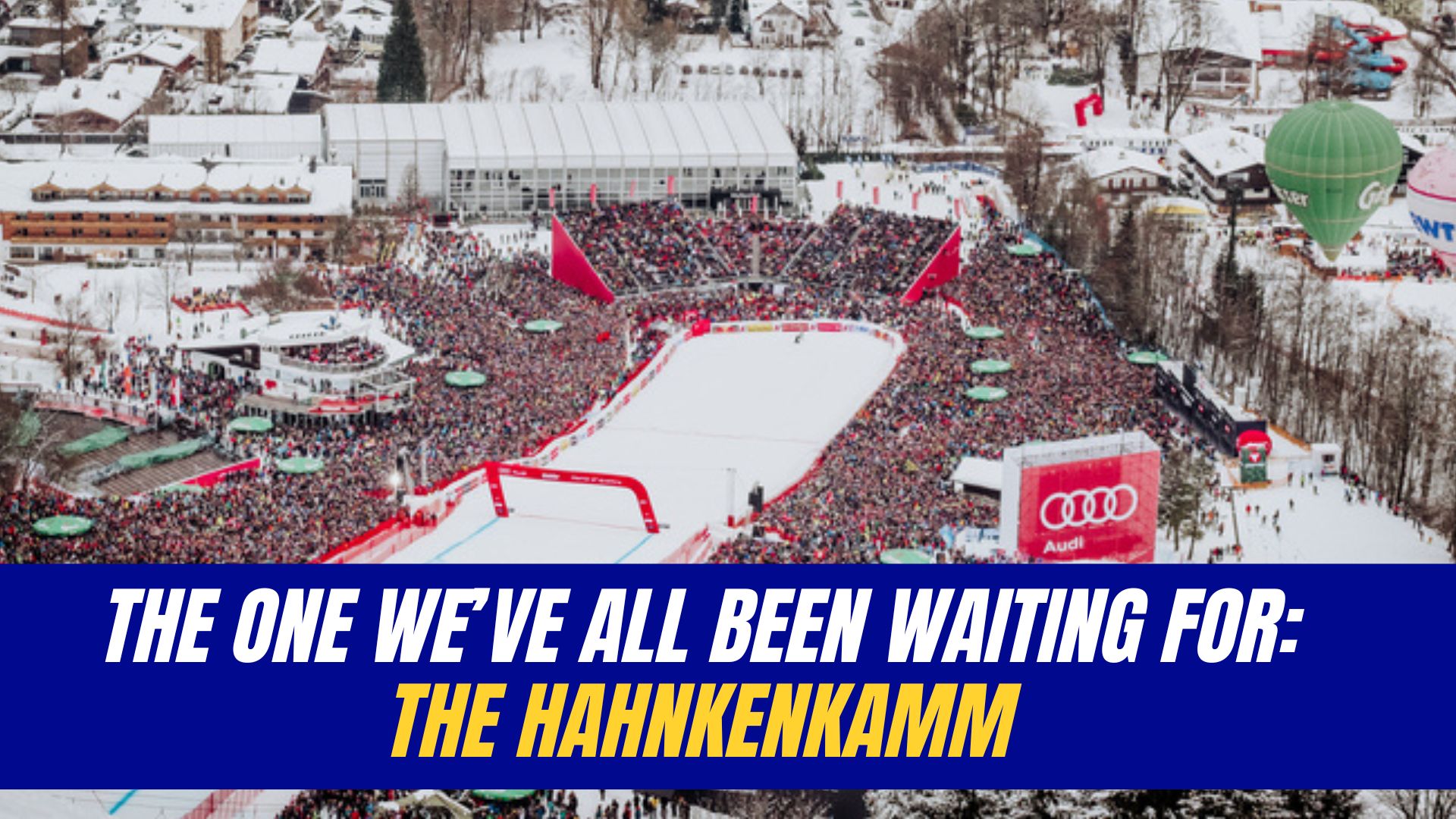
Kitzbühel is a name everybody knows; it is a synonym for downhill and a celebration of the alpine skiing sport. Let us be curious and dive down deep into the history and present of this famous race.

The Hahnenkamm Races, held annually in Kitzbühel, Austria, are among the most prestigious FIS Alpine Ski World Cup circuit events. Since their inception in 1931, these races have attracted the world’s top skiers and vast audiences with celebrities on-site. The event is broadcast globally, even in countries that rarely watch alpine skiing. What is the Grand National for the British or the Superbowl for the Americans, that is the Hahnenkamm for the Austrians. But why is it so popular, and how it all began?
The History of the Kitzbühel Races
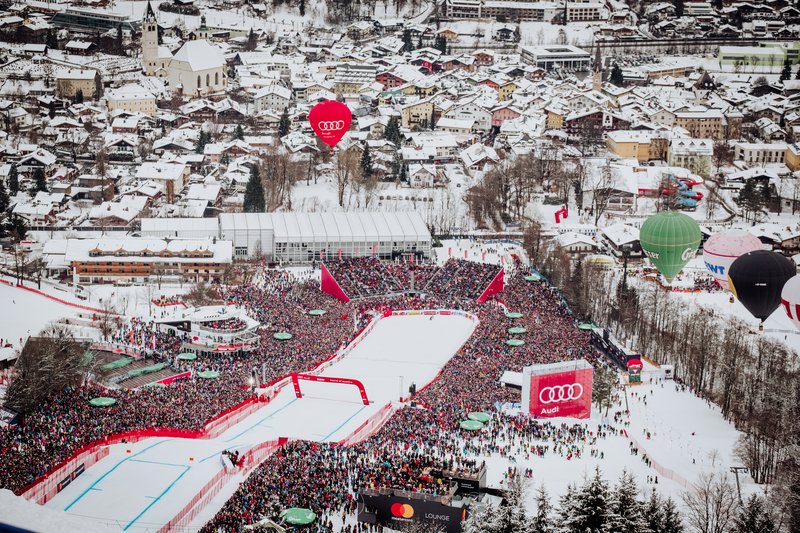
The inaugural Hahnenkamm Race took place in 1931. Nobody would foretell such a glorious future for the races at that time. Alpine skiing has not yet been an Olympic sport, as it was added to the Games program only in 1936; who would have guessed that less than a hundred years later, the venue would attract attention worldwide?
Today, Hahnenkamm is the Streif, the scary, steep, sundry, and icy slope that tourists usually don´t ski. The signs warn them off, as they should because everybody wants to try the Streif (until they face the Mausefalle). For most of the skiing season, tourists are not allowed to enter the black piste, as the surface is being prepared long before the races. In some places, the slope is so steep that the snowcats cannot help the organizers, and they have to work the piste in the old style. Why let tourist mar the national treasure with their clumsy skiing?
However, if you want to see most of the Streif and enjoy it from the tourist´s point of view while being in Kitzbühel, you can choose the Familienabfarth, which copies the race track while being much milder in all aspects and offers the best view you can get.
However, the Hahnenkamm has not always been the Streif. Initially, the races were held on various slopes, including Fleckalm, Stickelberg, Pengelstein, Ehrenbachhöhe, and Hahnenkamm. Since 1937, competitions have been held on the renowned Streif and Ganslernhang courses.
The Legendary Streif
The Streif downhill course starts at an elevation of 1,665 meters and descends to 805 meters over a length of 3,312 meters, featuring an average gradient of 27%. But in certain passages, the gradient is much steeper.
Notable Sections:
Mausefalle
This is the part where a normal person would regret the moment he or she entered the Streif. Looking down the Mausefalle, most people stop breathing and take off their skis. The downhill gladiators revel in the view and look forward to the gradients up to 85%, as well as jumps that can propel skiers up to 80 meters.
Steilhang
This challenging, steep section requires precise technique. At places, the slope is inclined adding to the difficulty, and at the end, as racers enter the flats, they also have to deal with the compression.
Traverse
A critical traverse demanding strategic navigation. From my point of view, this section is the scariest when we watch it on TV.
Iconic Moments and Figures
As for the winners, Didier Cuche holds the record for the most downhill victories on the Streif, with five wins between 1998 and 2012. Franz Klammer, an Austrian skiing legend, secured four downhill victories on the Streif, with his last win in 1984.
Many racers had crashed on the Streif in the past, and although it looks dangerous, statistically, it did not claim more careers or lives than any other racetrack. But there had been dramatic crashes, like the one of Brian Stemmle in 1989, who ended up in hospital with a broken pelvis.
There were also crashes with happy endings. In 1995, the Italian Pietro Vitalini failed to navigate the Traverse, crashed, and flew over the safety nets, but the thick layer of snow (and a little bit of luck) saved him from the worst. And he even raced and finished fifth the next day.
In 2008, an American, Scott Macarthney, fell in the finish and lay unconscious, suffering a traumatic brain injury. After the doctors put him in an artificial sleep, however, he recovered and celebrated his comeback the same year in November 2008.
Another miraculous survival met Peter Fill in 2013. He crashed in the net on the Streif, performed a perfect backflip, and remained unharmed.
To end on a hopeful note, let us watch the horror crash of Ryan Cochran-Siegel in 2021, who not only recovered but this year belongs to the favorites for the coveted prize. That shows how tough these guys are.
If you cannot wait for the Hahnenkamm I don’t recommend searching through YouTube, as most of what you’ll find will be crashes, and you have seen far too much of them while reading my article. Downhill skiing is not only about the imminent danger but also about the skills, strength, and bravery in facing challenges. I recommend you watch the Red Bull document on Red Bull TV.
You will enjoy magnificent views and unbelievable performances. As a prequel to the weekend races, it is perfect.