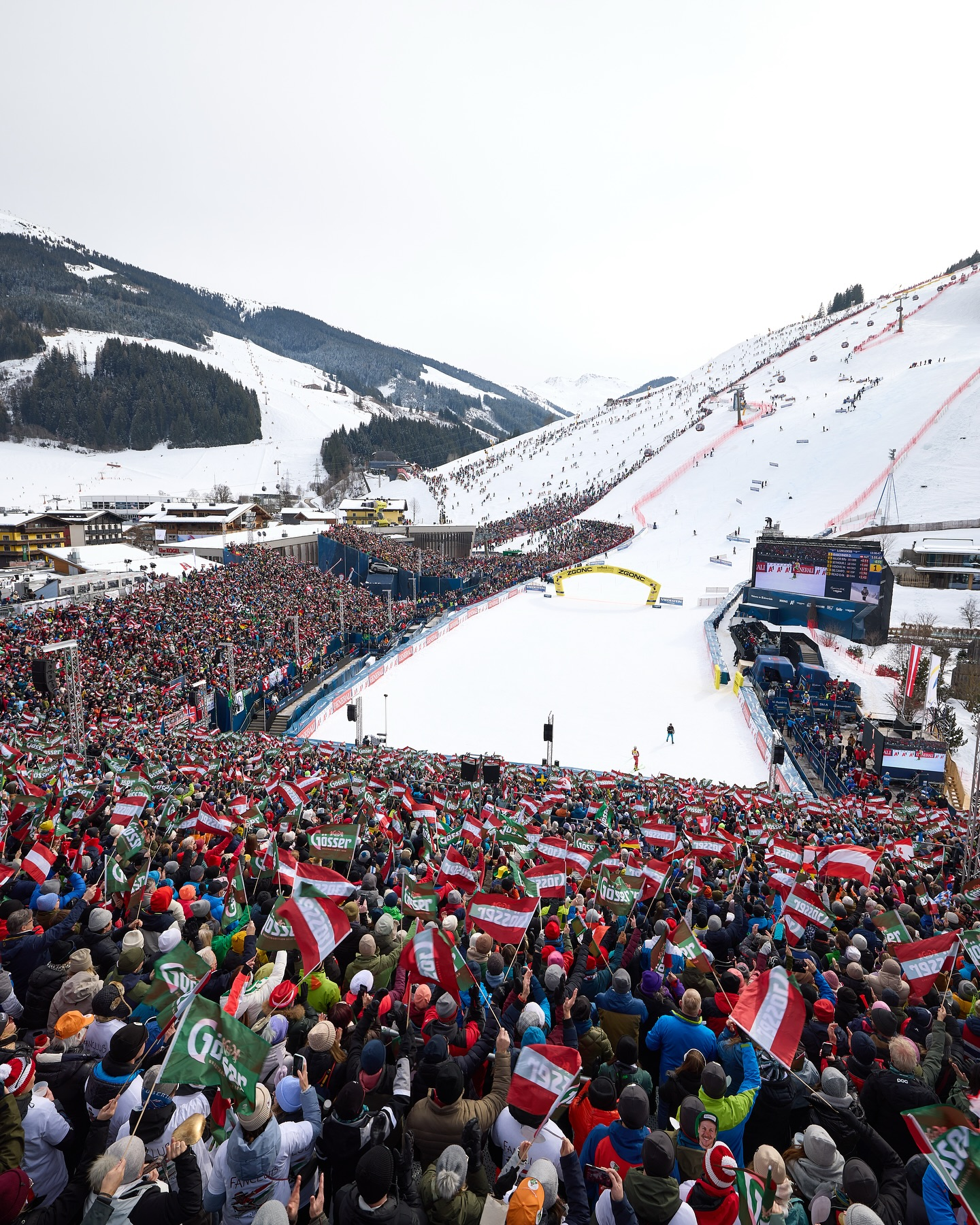
This World Championships writes fantastic stories, but the last day confirmed that most of those stories are about the heroes from the land of chocolate and watches.
The weather on the last day of this fantastic sports festival was just as perfect as the day the Austrians opened it. The sun was shining, but the temperatures sank safely below zero, ensuring icy and pristine conditions for both runs. The course was set rather conservatively—nothing crazy, nothing too exhausting. The first run contained many turns, while the second, set by the French coaches, was a little straighter.
The First Run: Who Likes It Turny?
The course was set rhythmically and regularly. The bottom part of the course was the trickiest, with sharp turns and longer distances between them. As the slalom was long, the legs of the athletes would be burning like hell at this point. Clement Noel (FRA) desired to confirm his role of a champion and did his best to prove his point in the first run. His run was clean and fast, and he would retain the red chair throughout the whole first run. Timon Haugan (NOR) continued to prove his staggering form this season and was very clean, fast, and brave, but another Norwegian overran him, as Atle Lie McGrath remembered his brilliant slalom skills. The biggest hope of the Austrians, Manuel Feller, felt the pressure on him, was a little too cautious and too heavy on the ski edges, and finished sixth with a 1,28-second gap on the leader.
Loic Meillard (SUI) showed once again that he knows no nerves and is a great tactical player. His run was perfect, not risking more than he needed, and he placed himself comfortably behind the French leader with only a 0,19-second gap.
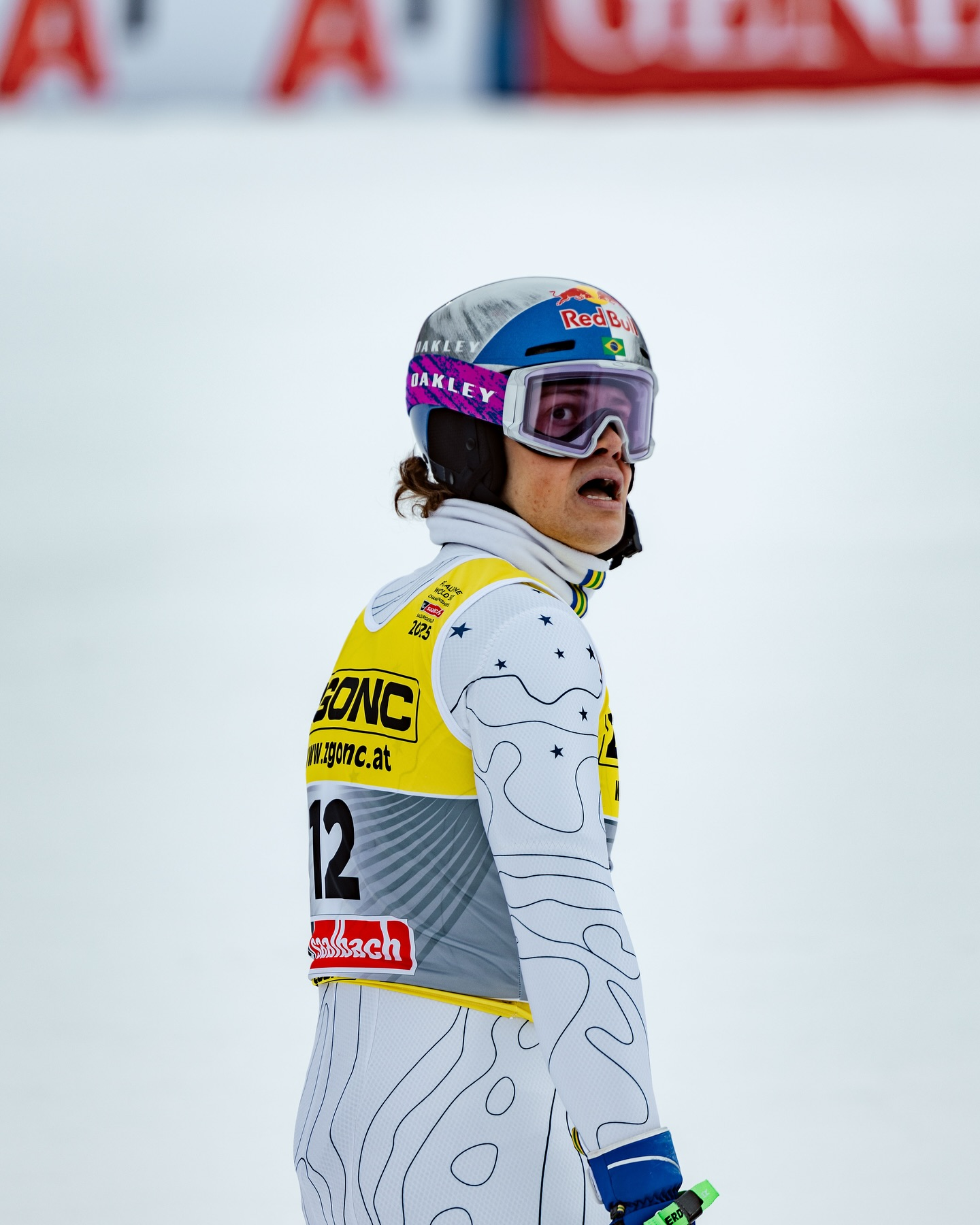
Lucas Pinheiro Braathen (BRA) tried hard to make the most out of his last chance to win a medal for his South American homeland, but he got cold just before the race; it showed in his performance. His run was calm and collected, but he took too few risks and could not maintain the light touch on the last pitch, finishing tenth with a 1,51-second gap on the leader.
The Second Run: Last Medals and Last Tears
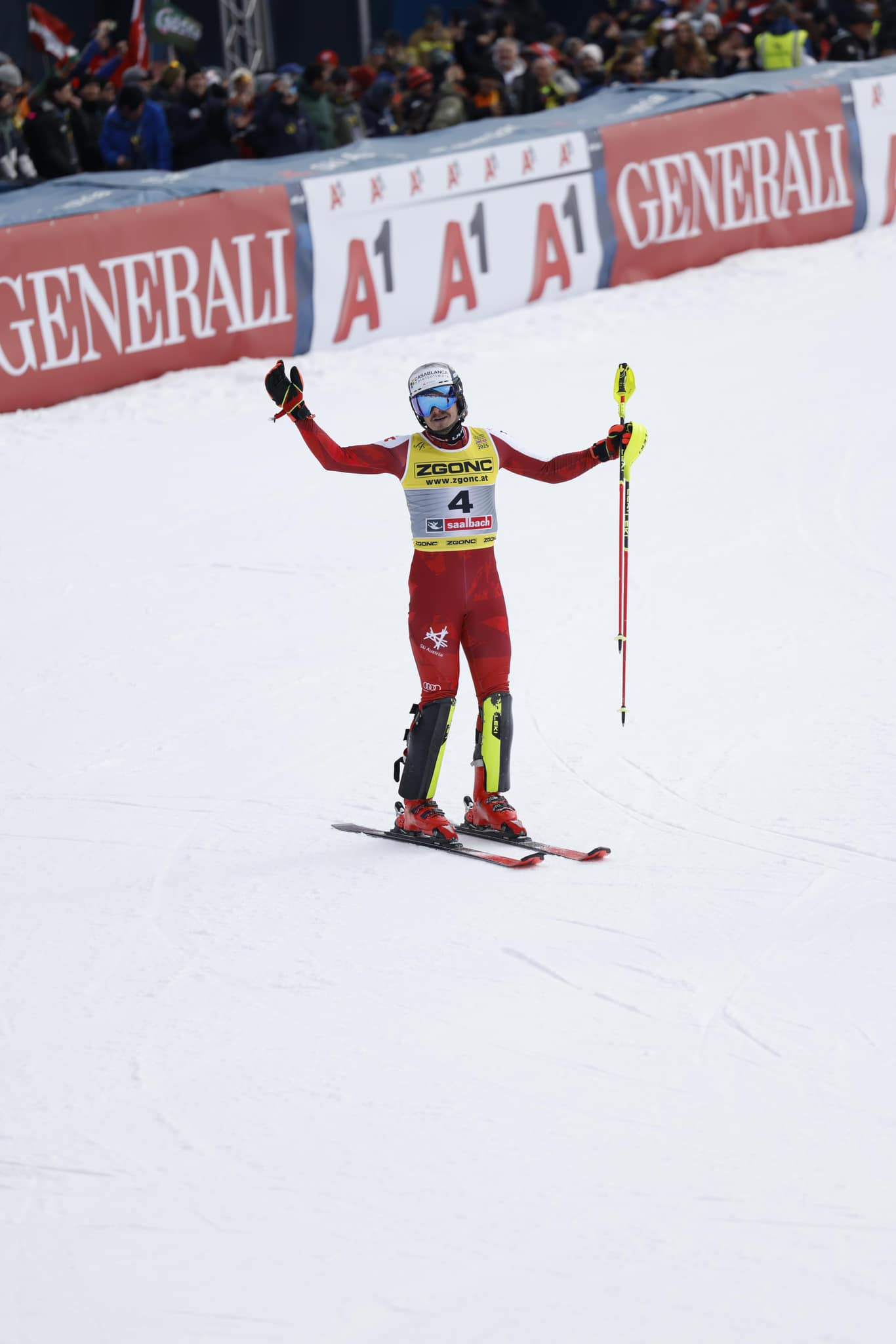
The second run was straighter and faster but still very conservative. The first distinctive (and surprising) performance was Billy Major’s run (GB). The Brit had a brilliant run, risked a lot, and made few mistakes but got himself the red seat.
Dominik Raschner (AUT) was silky smooth in his transitions from turn to turn, risking everything while being precise. Raschner’s run was one of the best we have ever seen from him, and it was amazing how the Austrian racers gave more than the crowd dared to hope for during the World Championships. Raschner was in the gold medal position with 22 remaining there until Dave Ryding (GB) deposed them, starting 10 ranks higher.
For the veteran Brit, this was the race of his life, as he showed absolutely no respect to the course, was quick and aggressive, and remained at the top as Henrik Kristoffersen (NOR), Lucas Pinheiro Braathen, or Fabio Gstrein failed to depose him—only Manuel Feller, who pulled his best performance this season, managed to depose Ryding.
Feller lost a bit in the upper section but drew energy from the roaring crowd and charged through the bottom part like a true champion. But to the home crowd’s disappointment, his joy only lasted for one racer’s run, as Linus Strasser was even better in the bottom section and, to top that, was very tidy in the upper section and deposed Feller.
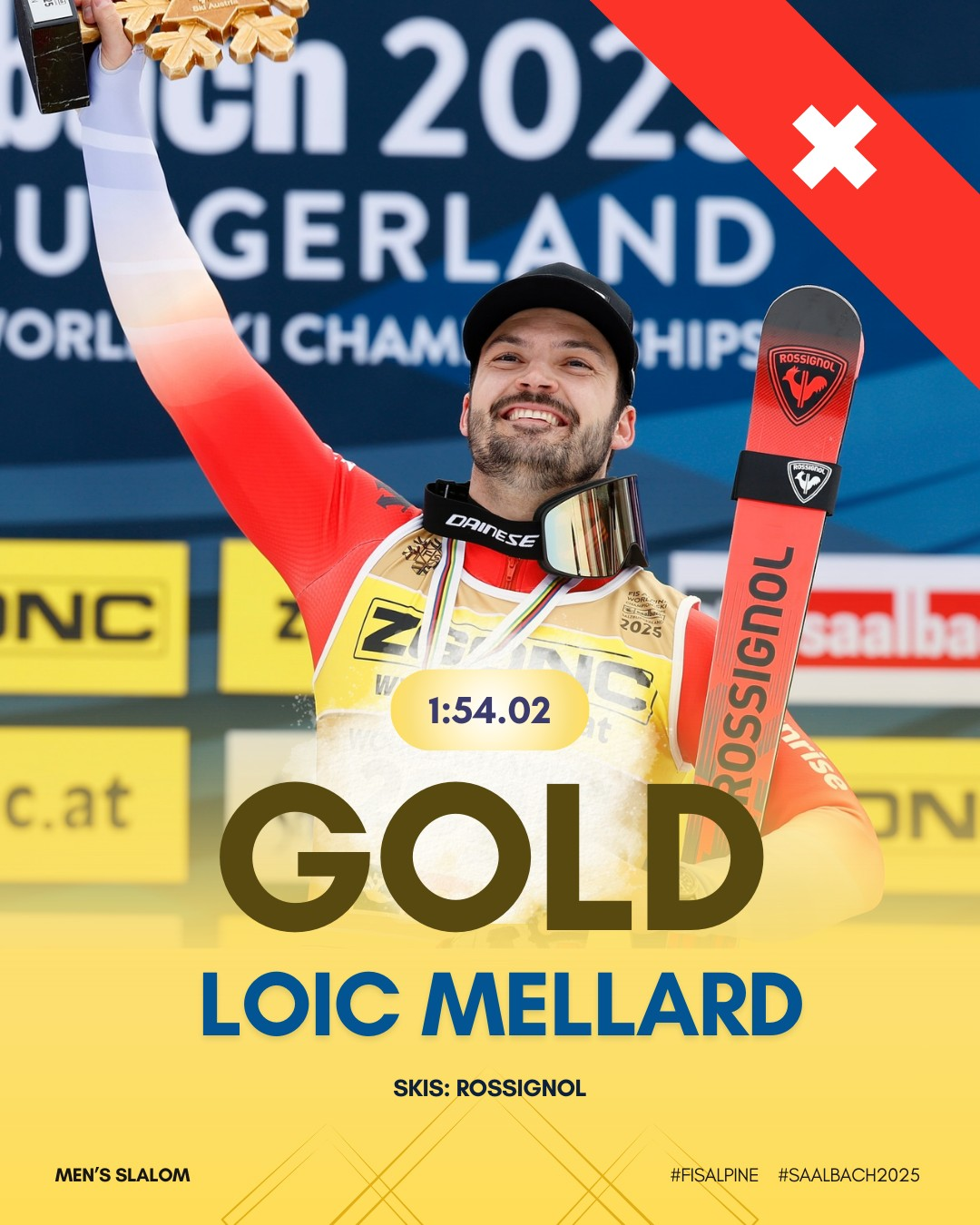
Only four men remained at the top; they all knew they had to risk it all. Atle Lie McGrath did precisely what he could do when he kept his nerves at bay. He was calm and round; it looked like he was not risking enough. His run did not look crazy but easy, but the skis did what he wanted them to do, and it was enough to get the lead. Then came Loic Meillard to write just another Swiss fairy tale. Meillard started with a 0,45-second advantage and arrived at the finish with everything he needed. His intensity was the same from top to bottom; he was technically perfect as we are used to seeing him, but the point was the tactics. He was fast but did not risk much, and at the very last moment, he threw it all on the line and let the skis run.
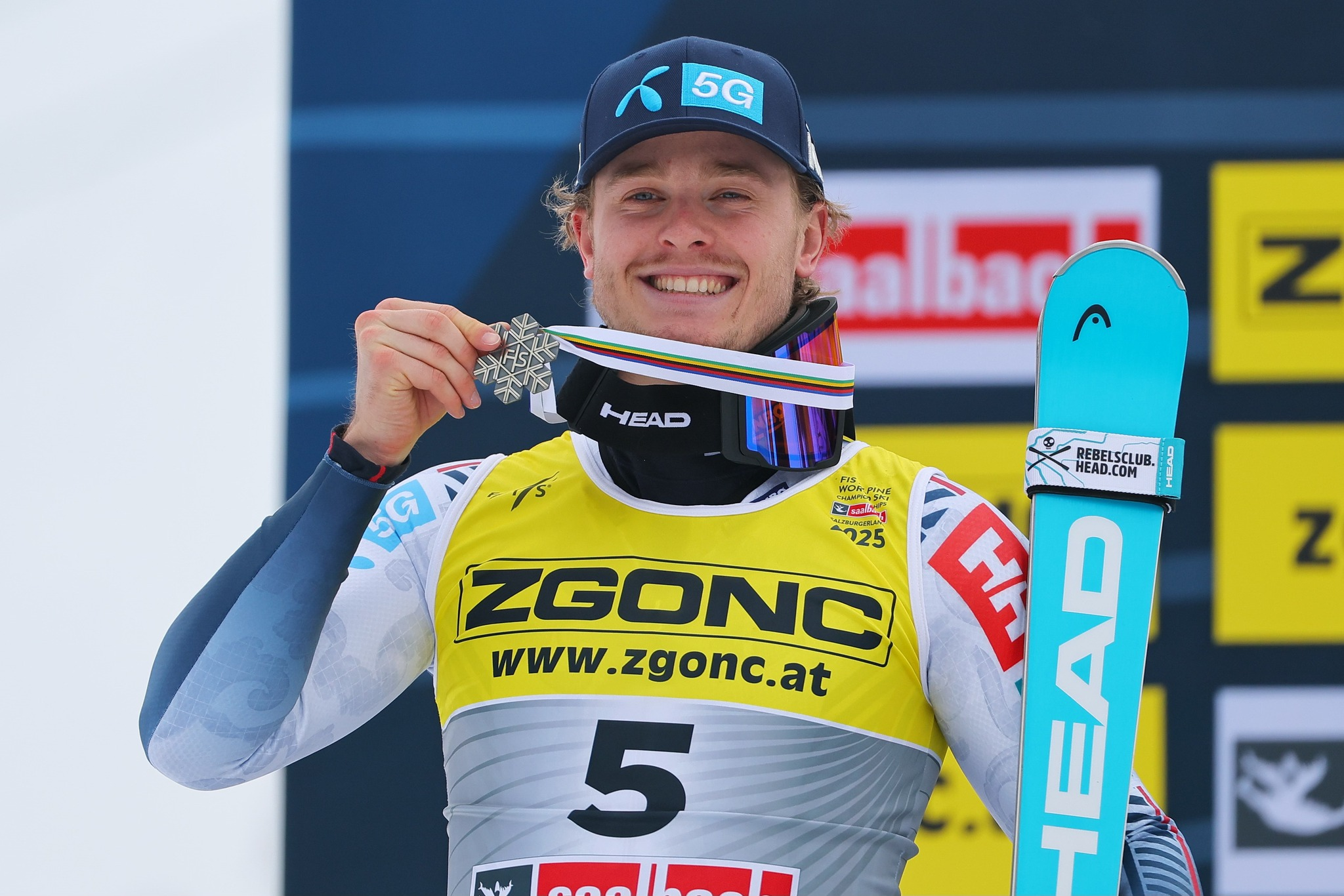
Clement Noel was under tremendous pressure, with only a 0,19-second lead on the perfect Meillard’s performance. He straddled before he could risk it all, ending his would-be-gold journey here. Thus, gold goes again to Switzerland with Loic Meillard, silver to Norway with Atle Lie McGrath, and bronze to Germany with Linus Strasser.
So, the World Champs is over. It wrote fantastic stories, and the athletes kept us on our toes for two weeks. Let them rest a little, and we will refresh your memories with the most remarkable stories in our next article.