The second day of the team event competition was as thrilling as the first one. In the end, it was all about psychology.
Team Event Format Novelty
With the traditional alpine combined competition, downhill racers complained that the event suited the slalom skiers. The results confirmed these concerns. In the team combined, however, it seems that the added element of performance anxiety for the slalom skiers does not suit them. We saw many DNFs in the slalom run, even from the most experienced racers. When slalom racers have to risk it all in the second run, psychology plays a significant role. But now they had to perform not only for themselves and their nations, but also for their teammates. In some cases, it showed that the pressure was too much.
As on the previous day, the team event featured interesting stories. We saw Breezy Johnson pairing with her childhood friend (Mikaela Shiffrin), but Atle Lie McGrath with Fredrik Moeller from Norway beat the girls. They went to kindergarten together and shared lovely pictures of five-year-old Vikings sitting at the same kindergarten desk. Other duos were just as fascinating. For example, Alex Vinatzer’s pairing with Dominik Paris created a dream duo for all the Dolomites fans. Or Christof Innerhofer pairing with Filippo Della Vite, who had a 17-year difference between them.
The Downhill: Nothing New Under the Sun
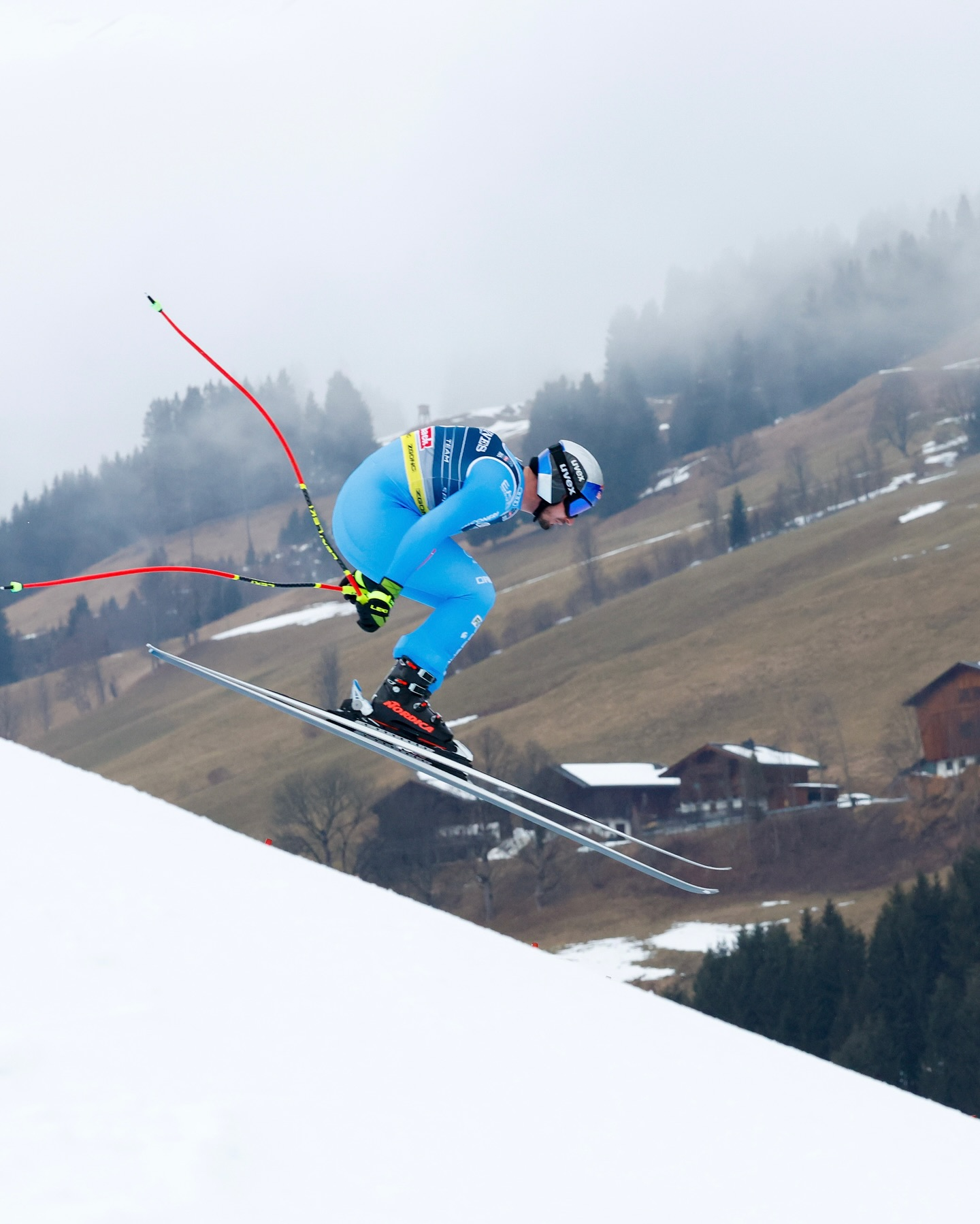
For most racers, this was their fourth run on the Ulli Maier track; they knew it by heart. And those skiers who performed well on the downhill day repeated their results except for Vincent Kriechmayr (AUT), who looked a little tired and made uncharacteristic mistakes, finishing fourteenth. Also, Dominik Paris (ITA) surprised his fans, but in a good way, as he was much smoother than usual and finished third. This was the first event of the World Championships when the weather did not play along. Not only was it wet, and the track had to be salted, but the visibility varied from racer to racer, with a thick fog hanging in the middle of the course, troubling some racers. Twice, the organizers decided to stop the race and waited for the mist to disperse, as it turned too dangerous.
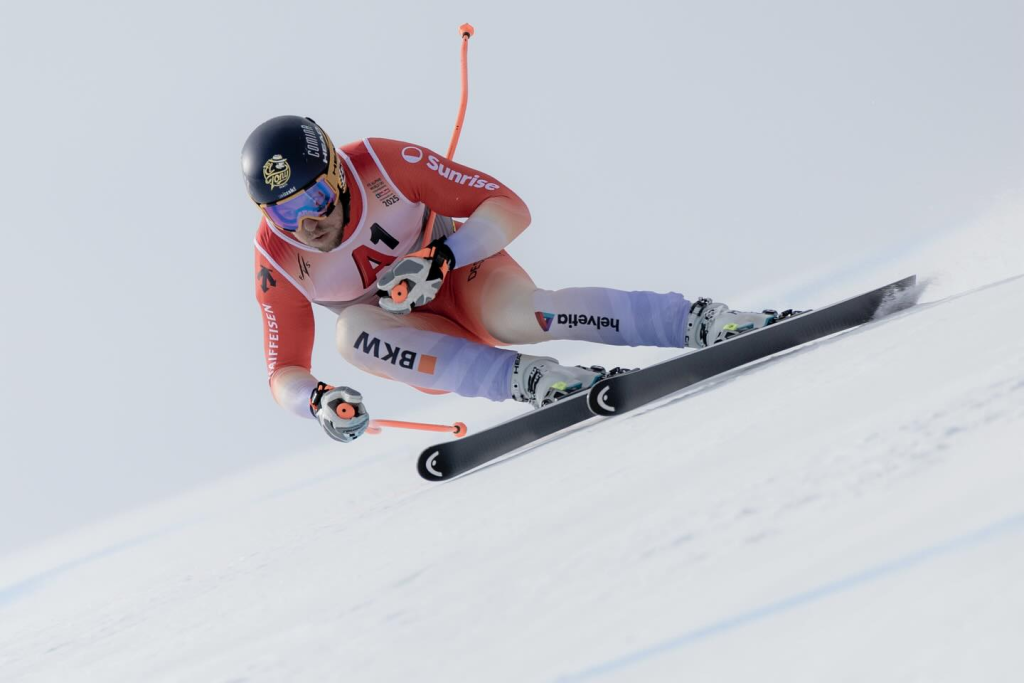
The Swiss youngsters ruled again. Alexis Monney had a crazy run, light on his feet, similar to his downhill day performance, and finished first. Franjo Von Allmen nearly fell in the upper part, prolonging his racing line and carving outside the blue line in the soft terrain. His run was even crazier, as he landed on one ski after a massive jump. But somehow, he never panicked and made up for his mistakes, finishing second with only a 0,02-gap on his teammate.
The Slalom: The Thrill and Tears
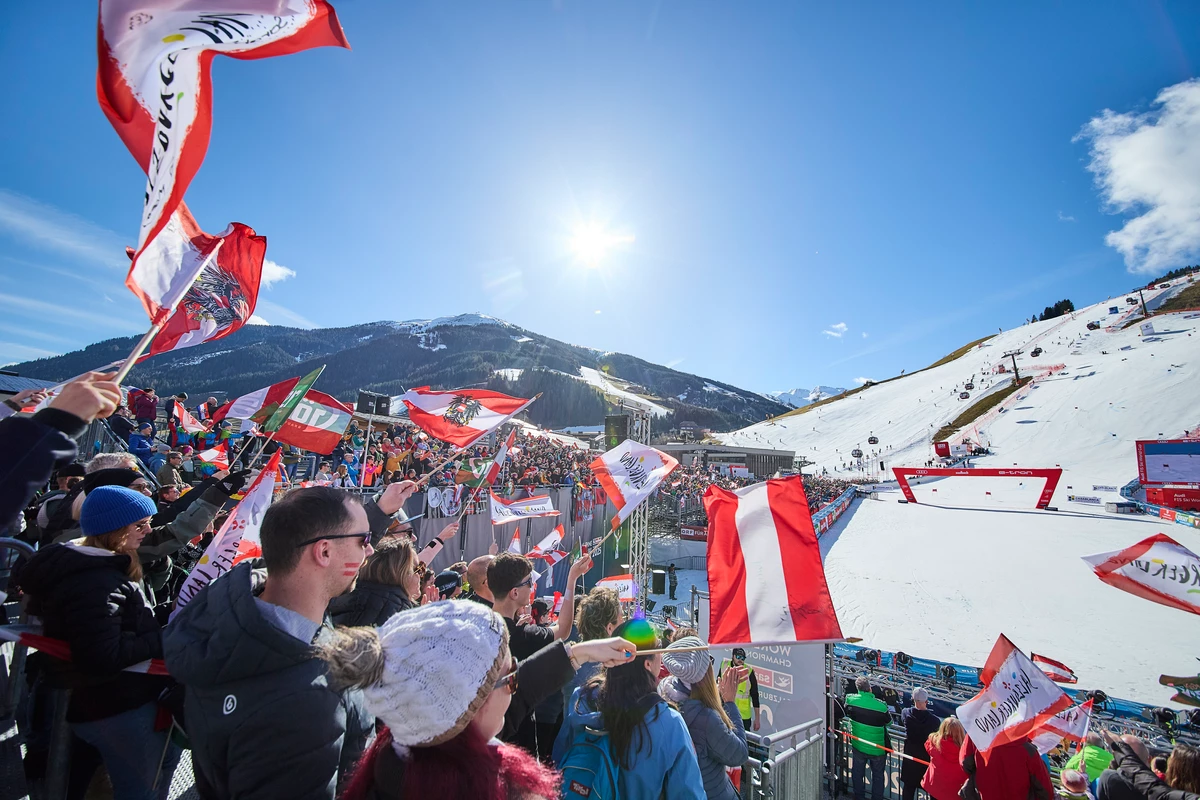
As the fans gathered to watch their slalom heroes, the weather smiled at them, and the sun even shone occasionally. Many surprising racers had decent runs, and we saw exotic flags of Spain, Estonia, Israel, Latvia, or those we are used to seeing more often, like the Czech Republic, Slovakia, and Finland. However, the Swede, Kristoffer Jakobsen, was the first to show the rest how to ski slalom. His run was clean and fast, and the Swedes sat comfortably in the red chair.
But more prominent names were to come, and Jakobsen’s teammate Felix Momsen lost too much time on the leaders during his downhill run. The gaps in the downhill competition were huge, so the slalom racers had to deal with additional pressure; only the riskiest and bravest performance would suffice. It got complicated as the softer track deteriorated, and they had to deal with the ruts. Nine racers out of thirty either skied out, fell, or straddled, including Alex Vinatzer (ITA), Marco Schwarz (AUT), Manuel Feller (AUT), Clement Noel (FRA), Filippo Della Vite (ITA), Dominik Raschner (AUT), or Daniel Yule (SUI). These racers are no amateurs, and Clement Noel is known for his consistency. Of four Austrian racers, only one finished: Fabio Gstrein paired with Daniel Hemetsberger. This pair finished fifth in the final rankings.
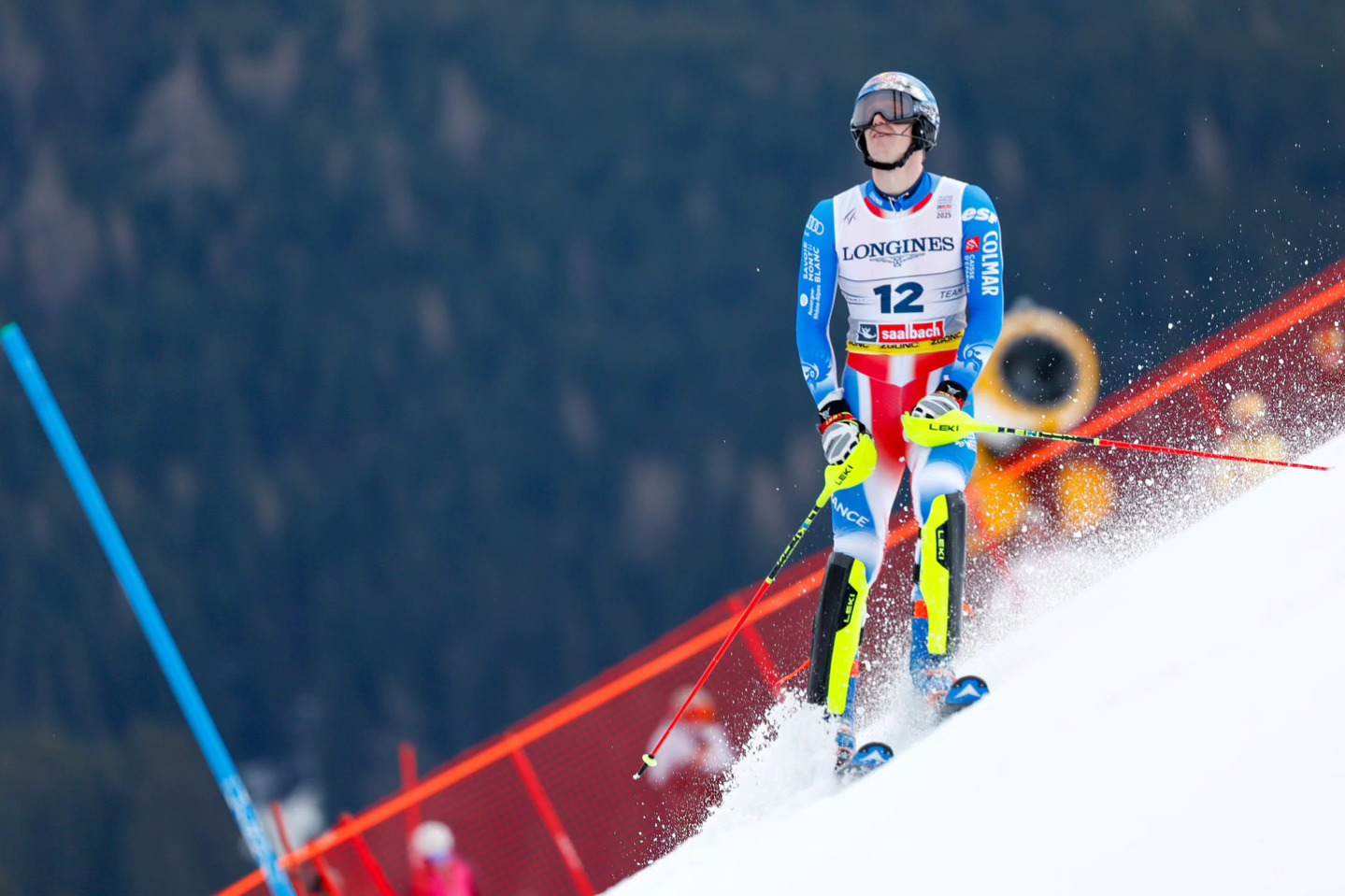
Benjamin Richie (USA) pairing with Ryan Cochran-Siegle was brilliant, and for a long time, the American duo occupied the red chair.
But the Swiss would not have that.
First, Marc Rochat, paired with Stefan Rogentin, performed his best run of the season and placed the Swiss in the red chair.
At that moment, most racers would love to be part of the Swiss team. Even those less lucky or those who did not compete today cheered and celebrated like crazy in the finish area as the show went on.
Timon Haugan (NOR) was a little too lethargic, throwing away his teammate Adrian Smithed Sejersted’s advantage. Stefano Gross (ITA) bravely used his teammate’s result (Mattia Casse), but it was not enough. And as the last non-Swiss, Alex Vinatzer straddled, it was clear to everybody that the Swiss were guaranteed a medal. The only question remained: how many and what color they would be.
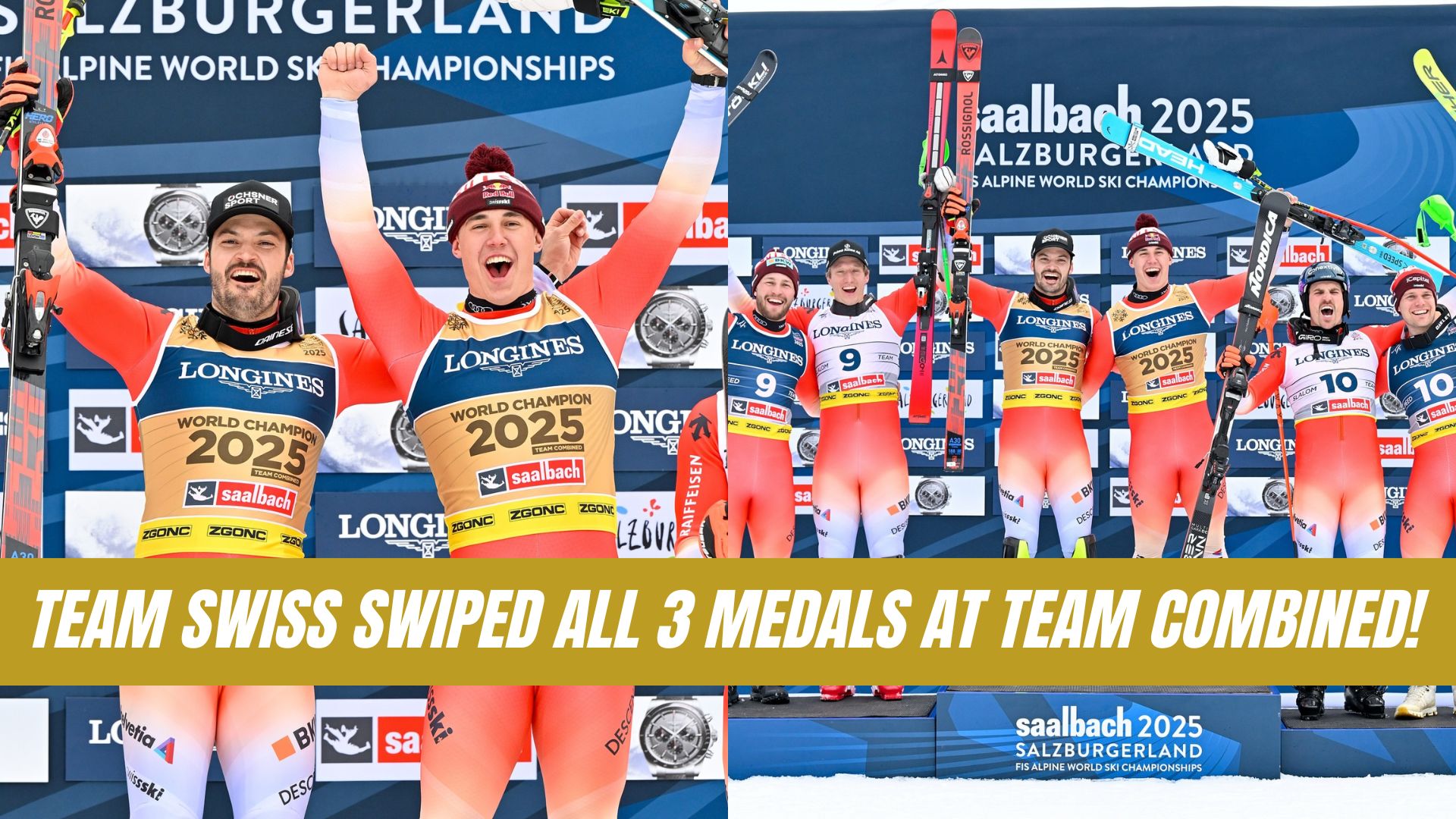
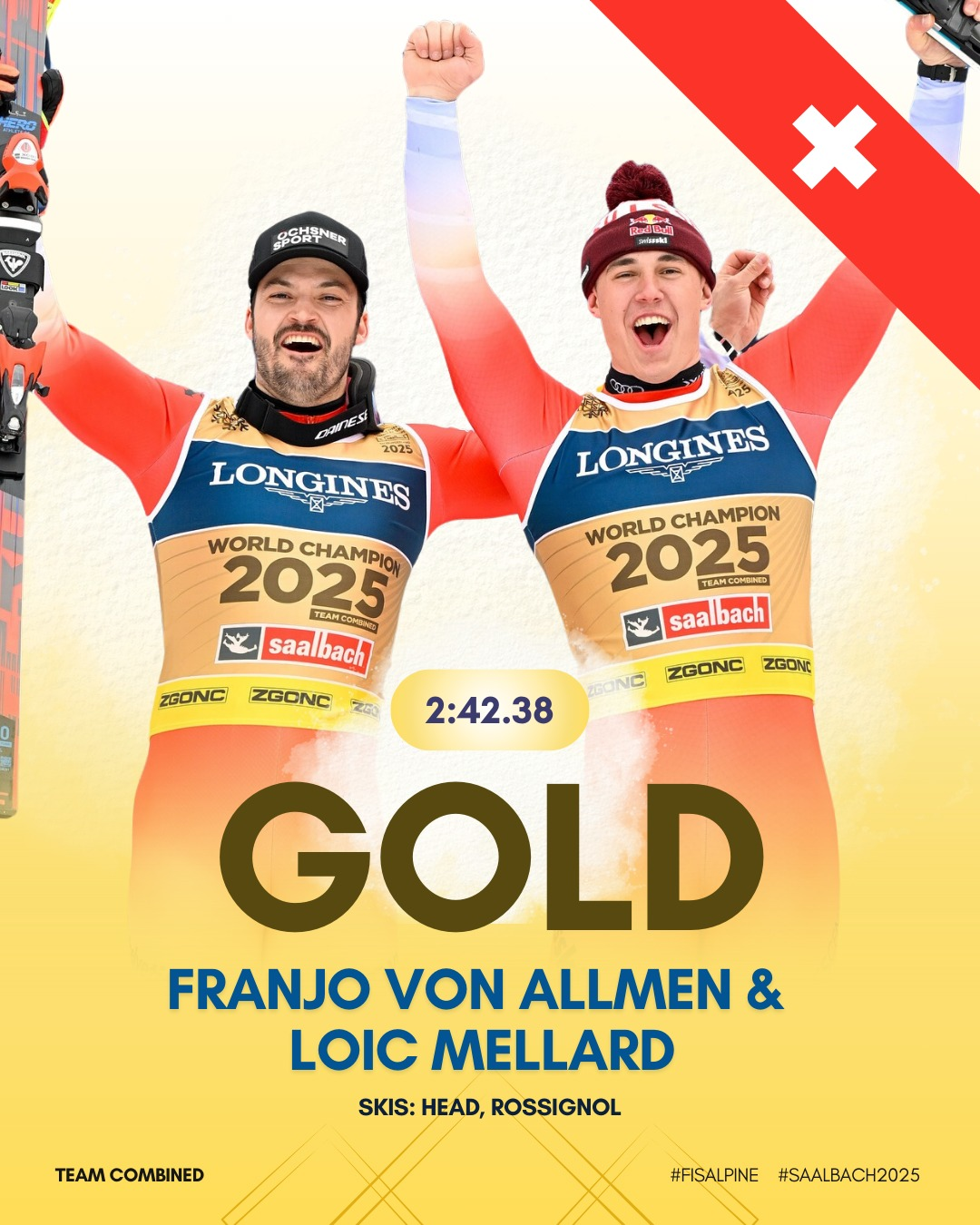
Loic Meillard did not fail; he was as consistent as ever, bringing his teammate Franjo Von Allmen another gold medal. Tanguy Nef was maybe too cautious, not wanting to throw it away, and well aware that silver was close. Thus, Tanguy Nef and Alexis Monney finished second. Marc Rochat and Stefan Rogentin were third in the end. The thrill was evident for Rochat, whose last podium result happened in 2020. Six Swiss athletes celebrated in the finish area, and at the medal ceremony, they sang the national anthem together.
The Power of the Swiss Mindset
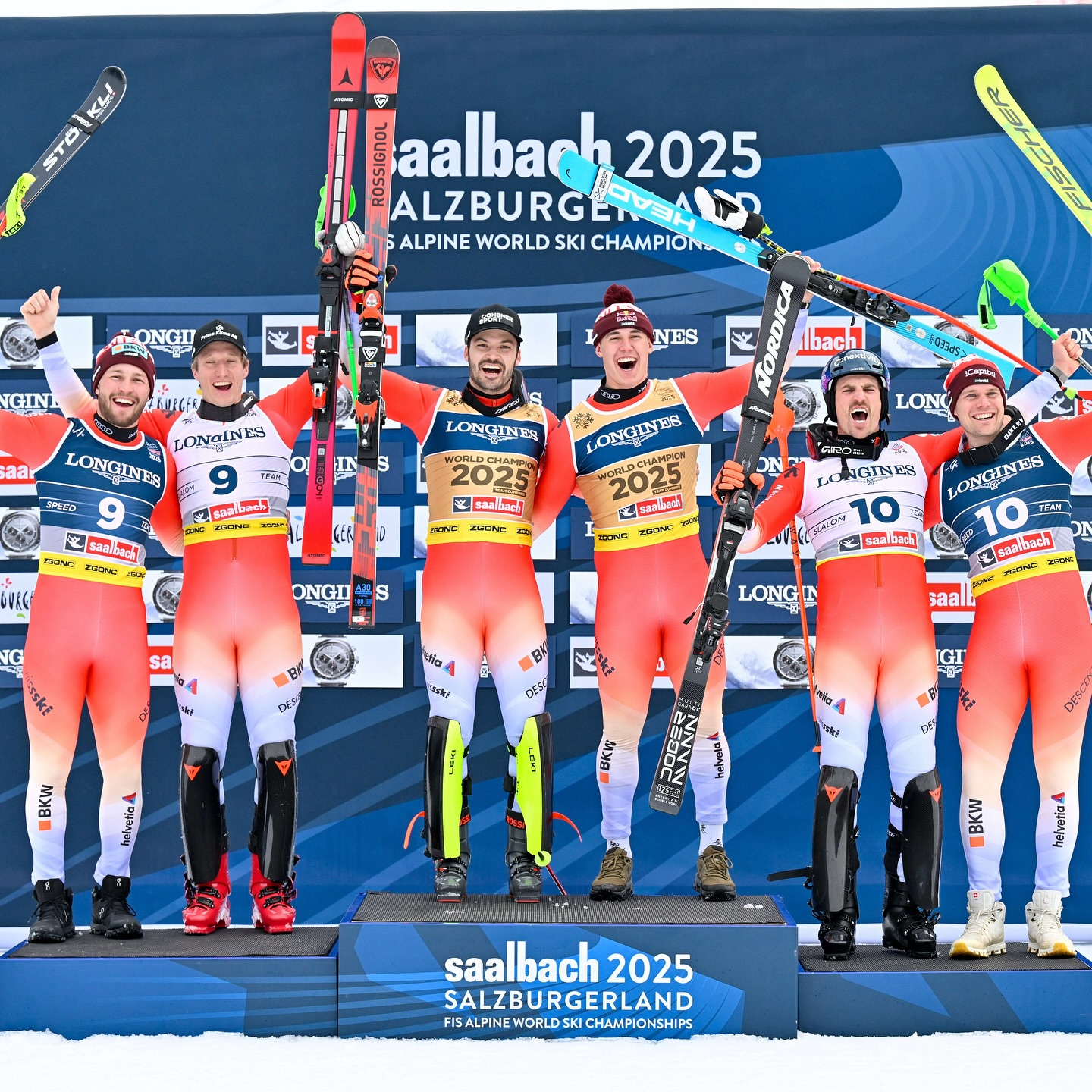
Swiss success comes down not only to talent, even though the young miracles of Monney, Von Allmen, and Odermatt (yes, he is still young) are phenomenal. Austrians can raise exceptional talents, but it comes down probably to mindset. Marco Odermatt expressed in one interview that the athletes are technically and physically on roughly the same level amongst those regularly ranking in the top 15. The difference lies in the mindset and the strength of the mind. Indeed, that was an overstatement; skills and physical prowess do matter.
But when you see the Swiss team in the finish area, all of them together, supporting each other, cheering, you realize that the team is everything. When every athlete matters, you can learn better with friends around you. There are members of the team, like Justin Murisier, who are older. Murisier does not belong to this miraculous young generation, but he was at the beginning, with Gino Caviezel, Loic Meillard, and Marco Odermatt forging the friendly basis the youngsters can be part of.
The same applied not so long ago to the Norwegian team when Aksel Llund Svindal and Kjetil Jansrud built the team; without them and the injured Kilde, the team is weaker. And look at the American women’s team, consoling each other and celebrating like crazy with their winners at the medal ceremony—no wonder the American girls grew so quickly, so high, with such a great atmosphere.
Maybe the Austrians could draw some inspiration. Instead of adding more and more pressure on their athletes, they could try to build more team spirit and choose athletes in the team not just by their results but by the support they can give the younger athletes. The coaches could shield them from the criticism in the press instead of adding salt to the wounds with their press statements. But who are we to explain the logic of the power of psychology? The Austrians sure have their own experts to work with.
What Comes Next
Both experts and fans expected the Swiss to demolish the competition during the World Championships, but this was far beyond anyone’s expectations.
They managed this without Marco Odermatt. For other nations, the worst problem comes now. Too many racers suffered psychological blows during this competition, with the Swiss crew (and an American, Benjamin Richie’s run was above his standards) feeling like superheroes. With the technical competition just starting, this is no good news for the rest.
But we will see, there are still four races to go, and with the women, the Americans and the Austrians are on fire.