
As Mikaela Shiffrin took her 100th World Cup victory, celebratory articles summarizing her career sprang up like mushrooms after a rain. Well, this is not one of them.
The numbers can sum up Mikala Shiffrin’s fantastic career; we can count the World Cup wins she collected since she entered the World Cup podium for the first time, back in the 2011/2012 season, in Lienz, Austria, as a 16-year-old miracle.
We can count the five overall titles she has gathered in the 15 seasons of skiing, her three Olympic medals, and 15 World Championship medals.
However, I feel like there is still more that goes underappreciated when recounting Shiffrin’s numerous successes.
1. Shiffrin’s Ability To Deal With Emotions
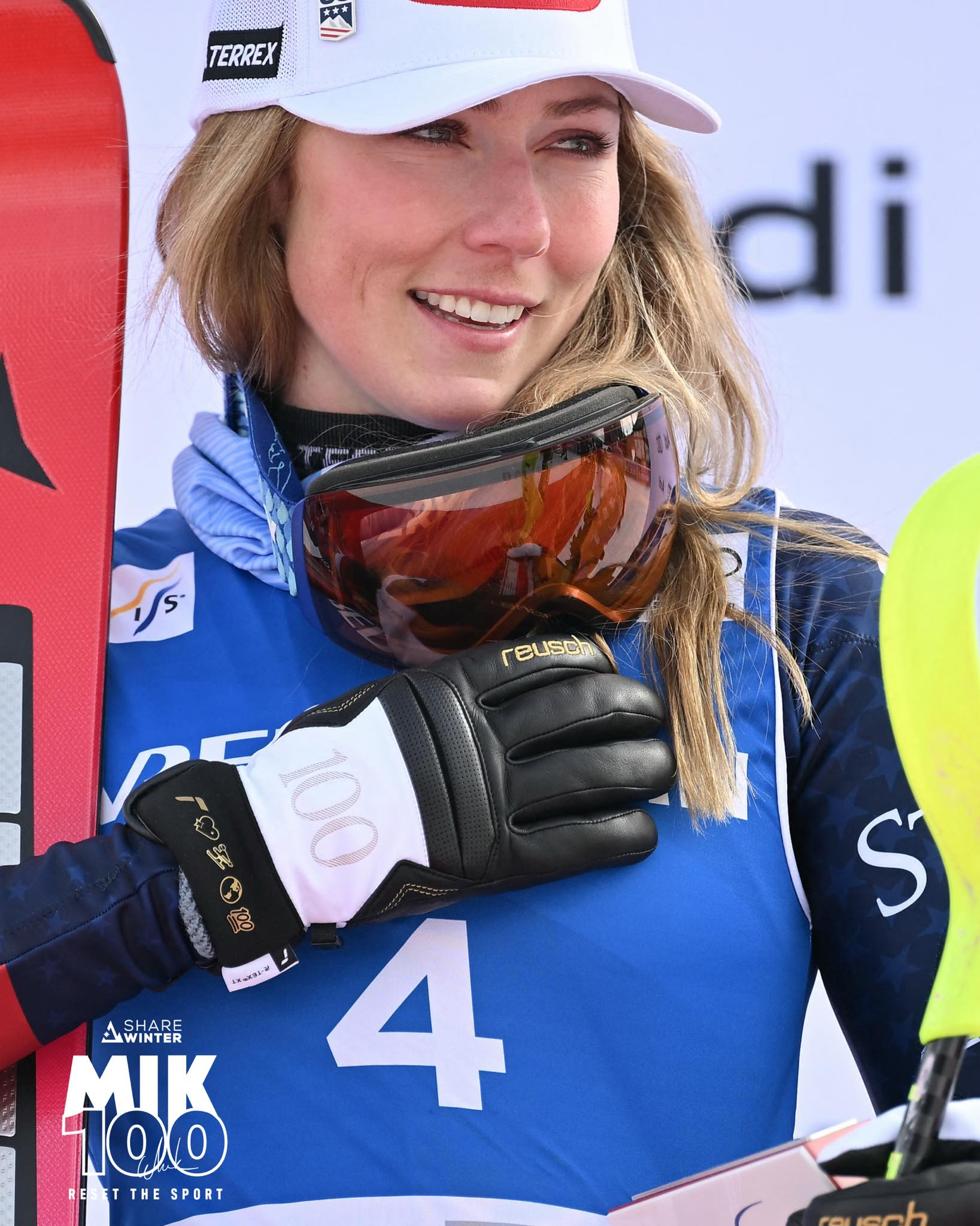
One of the things I admire most in Mikaela Shiffrin is that she is not afraid to feel. She is still happy to win and rejoice even when the feeling of victory must become ordinary at some point.
When you allow yourself to feel, working on your success is more difficult.
Some athletes are better at dealing with emotions, like Marcel Hirscher, who won a race after race like a machine, or Marco Odermatt, who seems to be perfectly composed for most of the time. Or like Sofia Goggia, in whom you can see the decisive drive but rarely see her express any emotions. As inspiring as these people are, they are far from our everyday human experience.
Most people are at a loss for their emotions; we struggle, feel like a failure, are afraid, and cannot help but show it. We are vulnerable.
Mikaela is vulnerable; she cries with joy and grief and is not indifferent to criticism, pressure, or expectations. And deals with it nonetheless.
Her social media presence and press interviews are inspiring just for that. Because sometimes, it looks like you have to close yourself to all feelings in order to succeed, but where is the joy in that? Mikaela shows us that it is more challenging to endure the pressure if you don’t suppress the emotions, but the hard work is worth it.
2. Mikaela Shiffrin Is Not Afraid To Be a Woman

Women in professional sports, politics, or leadership positions often take on the attitude of a man, and this point relates to the emotional struggle above. Women are not weaker; we are actually stronger in many respects; we carry children and give birth to them, and women used to watch their children die more often than not in the past. But to be able to do all that, we are more emotional and more empathetic, and our emotions are a common source of ridicule in the men’s world, a sign of weakness. Professional alpine skiing is a man’s world, where most coaches, organizers, committee members, and technicians are men. And women must navigate this landscape.
To do that, it is easier to pretend we are like men and feel less and care less. Mikaela does not do that; she is not afraid to cry, to express disappointment, and even does the womanly things all ladies do, like checking her image in the mirror before the medal ceremony.
Shiffrin was at one point even very open about the problem of women’s menstrual cycle. It was not supposed to be an activistic stunt; it just slipped out of her mouth in a post-race interview in January 2023 that she was surprised with her win, as “she was in an unfortunate part of her cycle.”
The interview resonated in the media, as women rarely mention this topic, and she had to deal with the taboo-breaking hint in a very funny way on her social media.
3. Mikaela Shiffrin Dealing With the Pressure
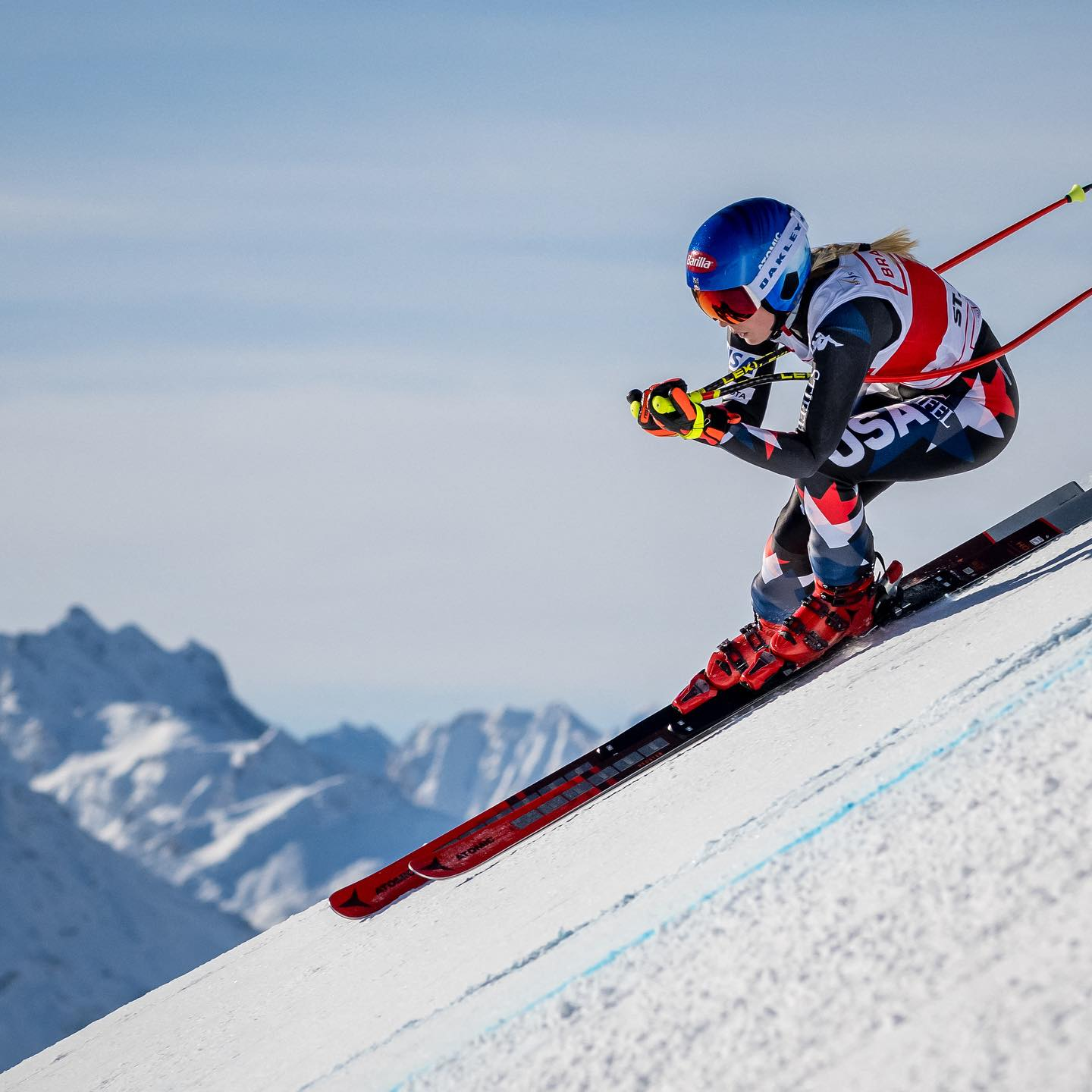
It is hard to deal with the pressure when you care. It is hard enough to fear failure because you care for other people’s opinions and the words they use to hurt you. In the 2022 Beijing Olympics, Mikaela succumbed to the outside pressure.
She entered the Games as a favorite, with high expectations on her shoulders, but she failed to finish in three races, including her signature event, slalom. The image of her sitting in disbelief at the side of the course became one of the most talked-about moments of the Games.
Mikaela faced a wave of negativity, dealing with public humiliation and self-doubt on a global stage. However, her response was powerful and transparent. She openly addressed the emotional toll, made some hurtful comments public and opened a discussion on the mental health of elite athletes.
4. Navigating the Showbusiness Aspect of the Sport
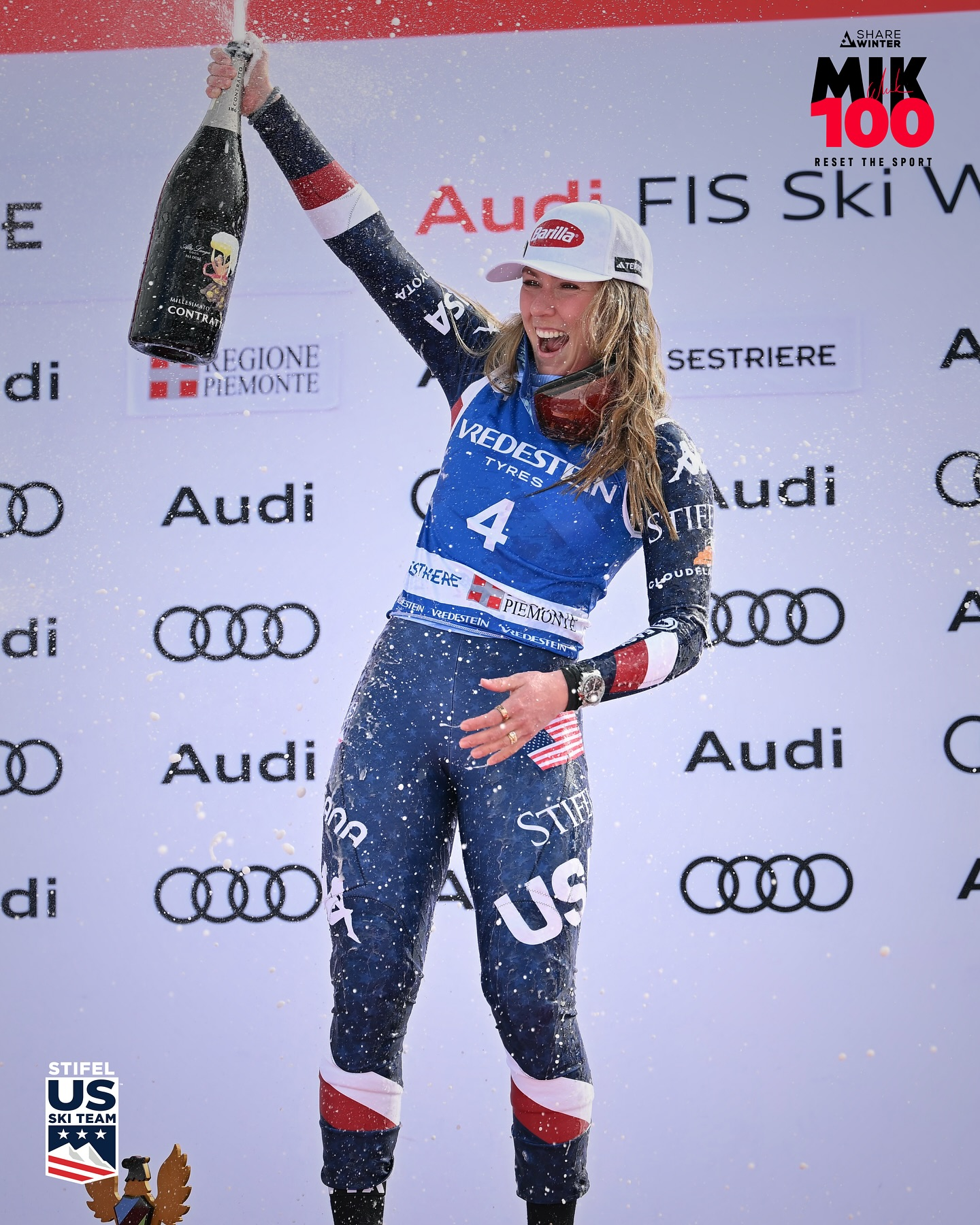
Mikaela Shiffrin nails authenticity on social media, and she must be a marketer’s dream. She always seems to say the right thing and shares just the right amount of her personal life to let the fans be part of it, but she still keeps the core for herself. She talks openly about some issues but in the right amount, letting the press know that her focus is not advocating for societal problems but rather skiing.
She talks about her injuries and struggles but likes to keep it light-hearted, and you never feel that she whines or complains.
You rarely hear her complain about anything, except for the 2020 season when she was ultimately down after the terrible family loss.
This skill is remarkable as it can get tricky in the social media landscape. You don’t want to disappoint your fans and want to show them some of your privacy that they expect nowadays. You must keep up with your sponsors’ hunger for social media presence. And you always have something to react to, as people tend to express their opinions on anything.
Furthermore, they express their opinions on you, and you must deal with that. It takes self-restraint and self-discipline to walk the line, and Shiffrin does that, setting a standard for professional athletes’ social media communication.
5. Coming Back from the Deep Valleys of Misery
In 2020, Shiffrin’s career sank as she had to deal with a personal loss. Her father, who practically raised the skier in her, suddenly died due to an accident. She lost all joy in skiing and had to stop her career for some time.
What really inspired me was her coming back.
Three points in any champion’s career genuinely fascinate me: their retirement and dealing with a return to everyday life (we rarely hear about that, pity), their comeback after injury, and their return to the top after they fall down.
It is one thing to become a champion and entirely another to remain a champion for a long time, to keep winning. But the most challenging part is to start winning after you stopped winning.
To continue the hard work even when you see no progress. To find the joy again. To acknowledge and refuse the inner voice that tells you to stop trying because you will never be on the top again.
Some people never return after they fall.
Shiffrin did, at least twice. First, when she returned to the sports without her father at her side. And second, this season after the abdominal injury. Returning after injury is something most alpine athletes have to do at some point in their careers; not all make it back to the top. And even when they do, we do not give their struggle the attention it deserves.
- Related post: Shiffrin Out Due to an Unusual Injury
Because that is something from which we can draw inspiration. We will probably never stand on a podium of any kind, but we all know what it is to lose something and struggle to get it back.
The 100th World Cup Win
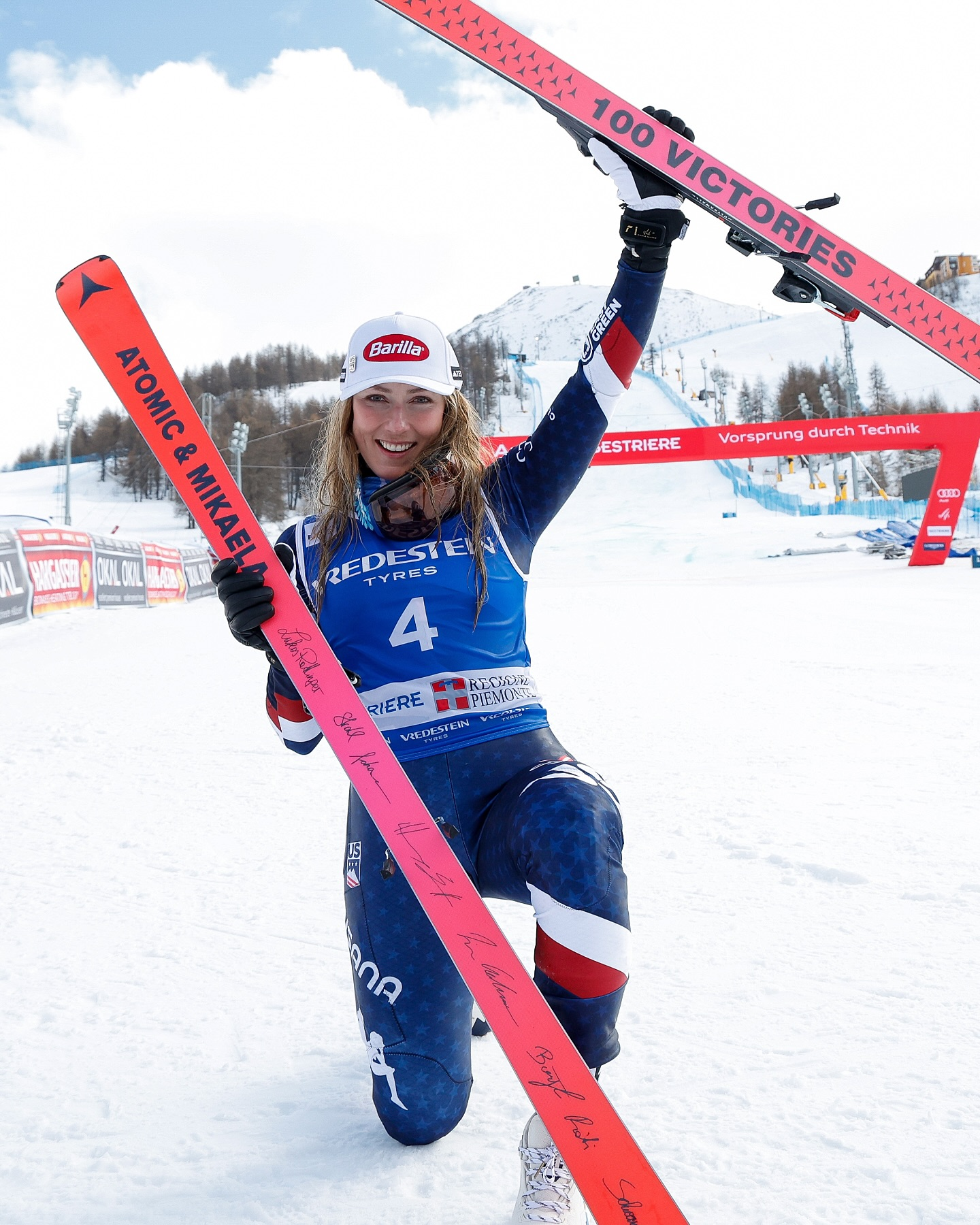
Thus, for me, Shiffrin’s 100th win was inspiring in this respect. Not because she got the round number to celebrate, but because she got it exactly now.
She dealt with the unsuccessful World Championships and treated the World Champs like a training ground. She survived two giant slalom races on Friday and Saturday, being such a debacle, to come back on Sunday and nail the slalom as only she could.
So, this is my view on one fantastic career. Miraculous athletes amaze us with their super-human performance; we all dream of superheroes who do what we can’t do.
But it does not hurt to realize that on the inside, when you strip off the laurel, they are human, and from these humans, we can find inspiration for our everyday lives.

