
Lindsey Vonn has announced a comeback on November 14, 2024. This has set the skiing world abuzz, as every comeback of a legend does. And this year, we are not short of comebacks. Vonn is the most decorated female alpine skier in history; however, her decision has sparked debates among fans, colleagues, and journalists alike. Is her return a story of perseverance and inspiration, or is it a reckless gamble?
The Queen of the Slopes
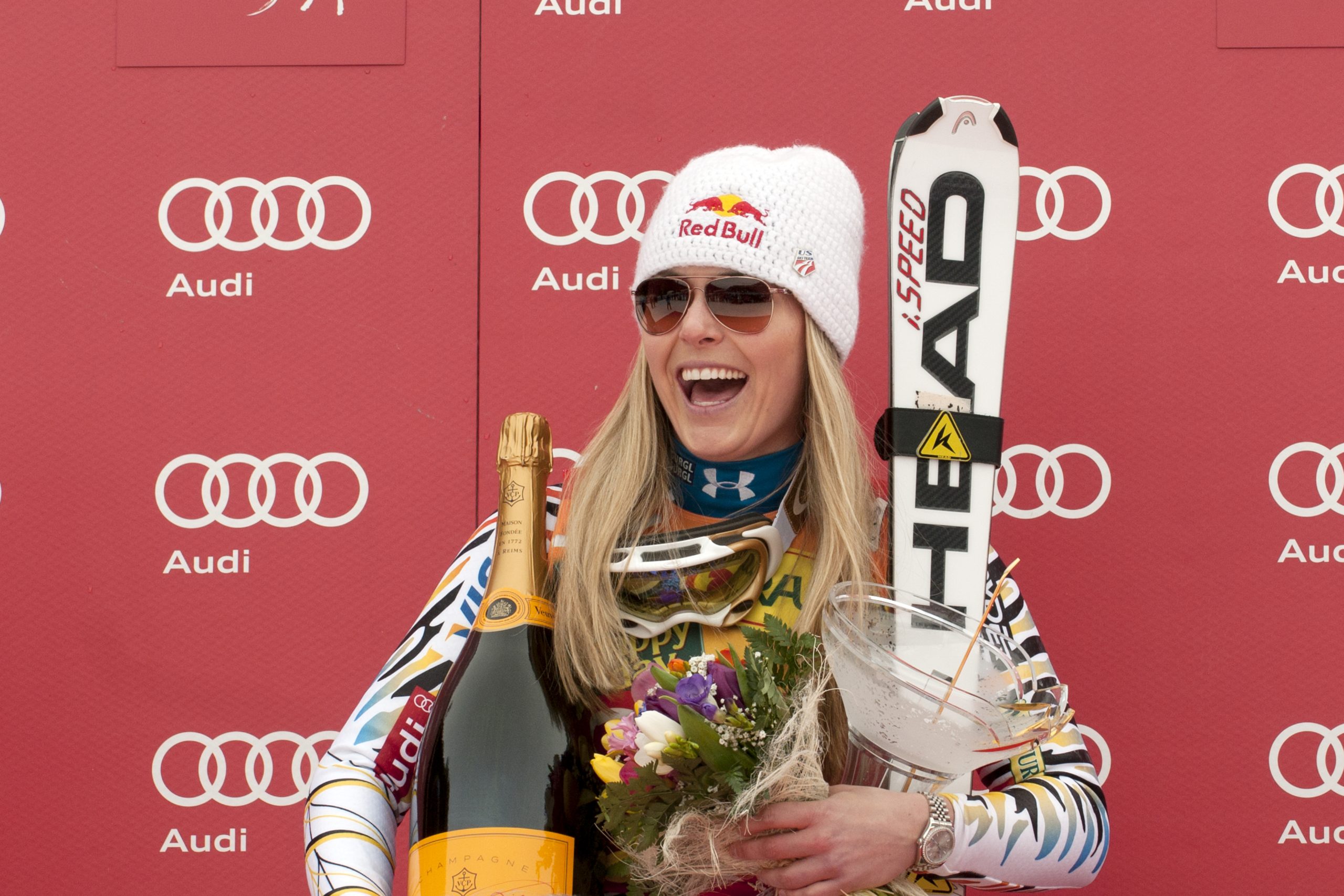
Vonn has achieved 82 World Cup wins, second only to Ingemar Stenmark in overall victories. She has claimed four overall World Cup titles. Her domain was the speed disciplines—downhill and super-G—where she proved to be as fearless as skillful.
Over a career spanning nearly two decades, she also earned three Olympic medals and eight World Championship podium finishes. But she served as an inspiration not only for what an athlete could do and what a woman could do but also for how many times a woman can stand up after being beaten down.
A Career Plagued by Pain
Vonn´s success came at a cost, as injuries plagued her career. She is not alone in this. Alpine skiers rarely retire with healthy joints; nowadays, most professional athletes end their careers with years full of pain ahead of them. Speed alpine disciplines are especially demanding in this, as the forces threatening the joints in the high-speed turns are enormous, and no skiing career is free of crashes.
But Lindsey´s career was particularly demanding in this respect. In 2013, she tore her ACL and MCL. A broken arm in 2016 added to her list of setbacks. Chronic knee injuries haunted her until her retirement in 2019 when she revealed the extent of her physical struggles. She shared her struggles on social media, which served as an inspiration to her fans.
She also shared her health issues during her retirement, which raised awareness about the damage elite sports do to athletes’ bodies. This remains hidden from the fans, as the athletes only share their stories as they recover from an injury and train to return. When they retire, they face different struggles, but nobody writes about that.
Speculation and Build-Up
For five years, Lindsey Vonn shared glimpses of her hard, pain-haunted life, surgeries, recovery, and endeavors to regain her fitness. She talked openly about her life with constant pain. Thus, many fans were surprised when speculation about her return to racing surfaced earlier this year. Some fans were thrilled, and many of her former colleagues, especially on the US team, were happy to have their legend on the team with them as a mentor and an inspiration. But many questions remained, and criticism arose before she officially confirmed her return.
What about her artificial knee? Is it really possible to come back at the age of 40? And why, why on Earth, would anyone undergo that?
The speculations fed the criticism, which helped to create the hype. That is how it is going. It was the same with Marcel Hirscher, and we can only pity the younger athletes who are training hard to appear in the headlines when the old legends steal the spotlight. However, elite sports have always been like show business; this is no exception.
Lindsey Vonn on her journey back
Vonn’s path to competition is anything but straightforward. She must prove her fitness and form to the International Ski Federation (FIS) to race again. First, she will try her fitness on the race course in Beaver Creek as a forerunner, without any pressure. This would allow her to taste the atmosphere again because, as every athlete knows, training tells you nothing. To understand how well you race, you must race.
Lindsey Vonn acquired a wildcard for the super-G race in St. Moritz in December; however, until then, she must lower her FIS score below 80. To do this, she will compete in the international FIS races. This is ingenious. The FIS races will help her decide her level, shake off the rust from her skis, and allow her to do that without the pressure of the World Cup circus. And if she cannot meet the FIS points goal until December, she can wait with her comeback until the races in her beloved Cortina D´Ampezzo.
A propose, Cortina.
Why does Lindsey Vonn do that?
As a Czech journalist, Michaela Kratochvílová hinted already in October that Lindsey´s favorite slope of all time was Cortina D´Ampezzo in the Italian Dolomites. Thus, her ultimate goal is to compete at the 2026 Winter Olympics in Cortina, Italy. Would her health allow it? Without trying, she would never tell. And Lindsey definitely feels like she has to try.
Support and Criticism
Fans and fellow athletes like Sofia Goggia have rallied behind Vonn, praising her determination. Publications like Powder Magazine celebrate her as a symbol of perseverance and resilience.
But not everyone is on board. Some ski legends and commentators, like Sonja Nef or Bruno Kernen, warn of the dangers. Bruno Kernen, the 1997 downhill World Champion, expressed skepticism about her skiing levels: “She might make it into the top 10 here and there, depending on the terrain and snow conditions,” he said. “After that much time away, she’ll need to take many risks even to be competitive. And when you push yourself to the limit, you risk going over it.”
Inspiration or Recklessness?
While some see Vonn´s comeback as a testament to human resilience, others view it as unnecessary and dangerous. Vonn will give her all, no doubt. But at 40, with an artificial knee, she faces a risk that might outweigh the reward. Downhill skiing is always risky, but a concept mentioned often by the Austrian Formula 1 racer Niki Lauda comes to mind, the idea of “calculated risk.” If the risk is too high, you don´t take it. And from a medical point of view, Lindsey Vonn risks too much.
If she injures her artificial knee, she might never ski again or even walk again, as this might result in the joint not being repairable. She could end up needing a stiffened joint permanently. She would lose her beloved sport and even the possibility to move and work out.
Furthermore, the risk of high-speed crashes grows with a body that does not do your bidding at every turn and a joint that could fail when you push too hard. The calculated risk is too high in this case. Does she want to kill herself on the slope? Should that be the legacy? Or if she wins the gold Olympic medal despite the risks, would that be inspiring or not?
But why do we even care? Why such a discussion? Because this question touches all of us on another level. What is the role of the legends and elite skiers? What should they inspire us to do?
The Role of Legends
Lindsey Vonn’s story recalls Pixar’s Cars 3, in which the protagonist must decide whether to keep racing or step aside to inspire the next generation. It’s a story about knowing when to let go. Should Vonn watch it and reflect on her own journey?
Should legendary athletes like Vonn stay in the spotlight or pass the torch to younger competitors? Her comeback, regardless of the outcome, will inevitably overshadow rising stars. Perhaps her greatest contribution to the sport now lies off the slopes—inspiring and mentoring the next generation. The same goes for Marcel Hirscher and any other skiing legend thinking about their comeback. Life after a star career is full of challenges. I loved how Lindsey shared her retirement struggles; it was inspiring. Because elite athletes inspire us, they should inspire us not only on the slopes but in their daily lives because we live our daily lives.
The Legacy at Risk
Time will tell whether Lindsey Vonn’s comeback will end in triumph or tragedy. Some voices claim that she puts her legacy at risk. But it is her legacy; it is for her to decide what to do with it. If I go back to the acclaimed Pixar movie, the sponsor of the old retiring car tells him, “Every time you lose, you damage your legacy.”
However, as the shiny red car in the movie refuses to give up because his legacy is his own, the audience cheers him on. Every person should have a right to decide what to do with his or her legacy, body, life, and health.
In my opinion, watching Lindsey Vonn take her place in everyday life and cope with daily challenges might be more interesting than watching her chase the spotlight at all costs. But she feels like she is meant to do something different. No matter how we feel about her decision, it sparks discussion about the risks of sports, elite athletes’ health, and the role of legends. And every time we reflect on that, it is good for us.
So, let us do what we will. Cheer Lindsey Vonn on, or don´t, and watch the young stars giving it all. It is our choice, as she made hers.