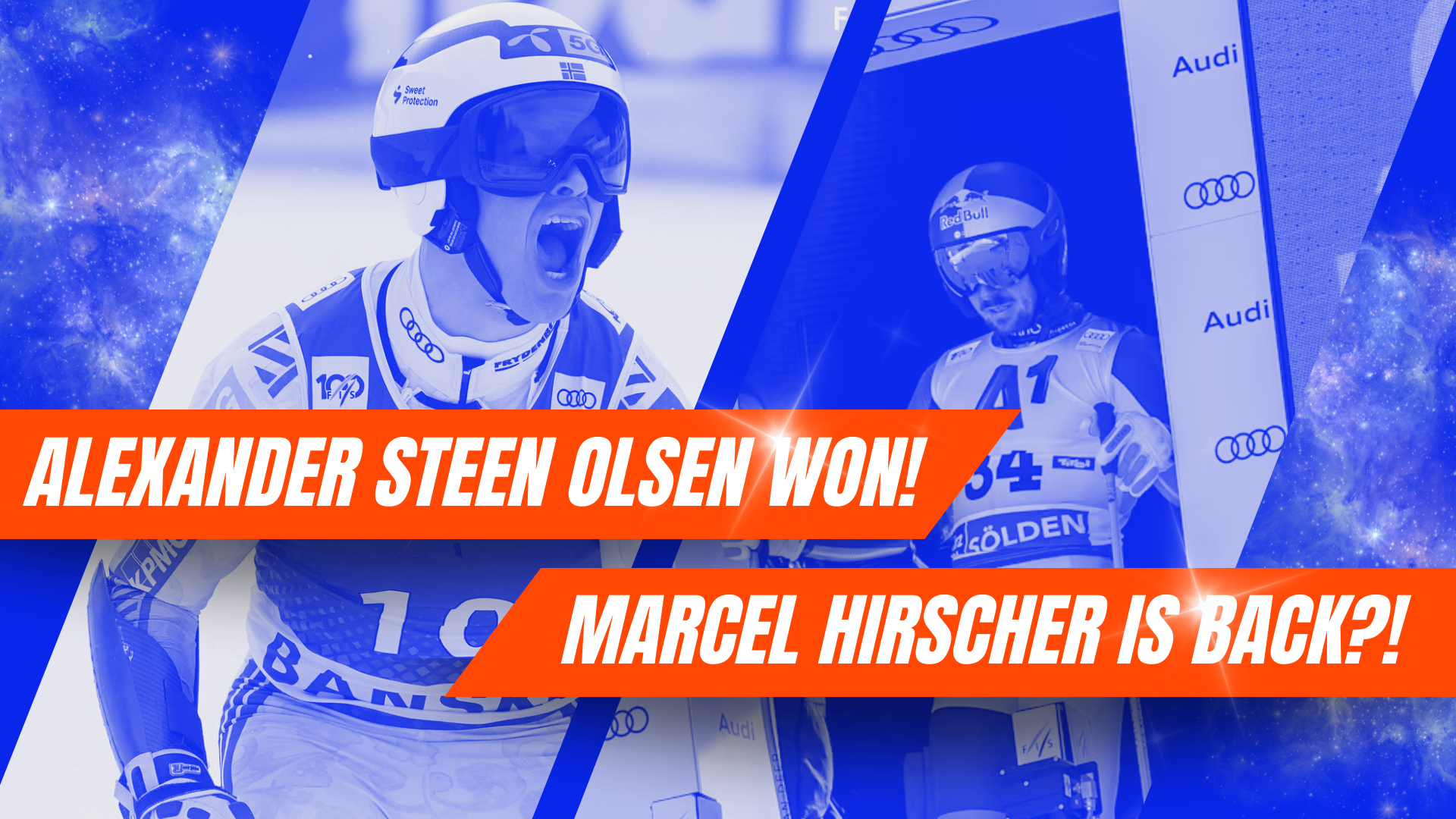
Consistent rain on Tuesday and perfect night slalom weather on Wednesday. Two night events, two parties for the Austrian fans. Much to enjoy.
Various Conditions in Schladming
Let’s talk about salt. In Czech, we have a saying: “Salt is more than gold.” In Schladming, they’d agree, as salt made the Tuesday races possible. We use salt to melt snow on the roads. Paradoxically, in race track preparation, they use it to prevent snow from turning into water. You spray salt on the track, and it immediately starts to melt, and due to the cold layer of snow under the salted surface, it creates a firm crust that is hard to melt, whatever comes.
On Tuesday, it rained all day and all night. Racers are not used to skiing in the rain, but the organizers somehow managed to maintain regular conditions.
On Wednesday, however, raining stopped, and the temperatures turned below zero. Thus, the salted surface of the slope turned into ice. But as Atle Lie McGrath remarked, the ice with so much salt differs. It is not as slick, not as firm. The Norwegians are said to be the best on a salted surface. And they proved just that in both races.
The Giant Slalom on Tuesday
The first run featured four Norwegians in the top 10 and Marco Odermatt in rank 12. In the pre-race interview, the Swiss superstar joked that he managed to win from the eleventh place last year, but this year, he would try to perform well in the first run so that he does not have to chase the leaders in the second. Loic Meillard (SUI) got a 0,11-second lead and was the last man to go in the second run.
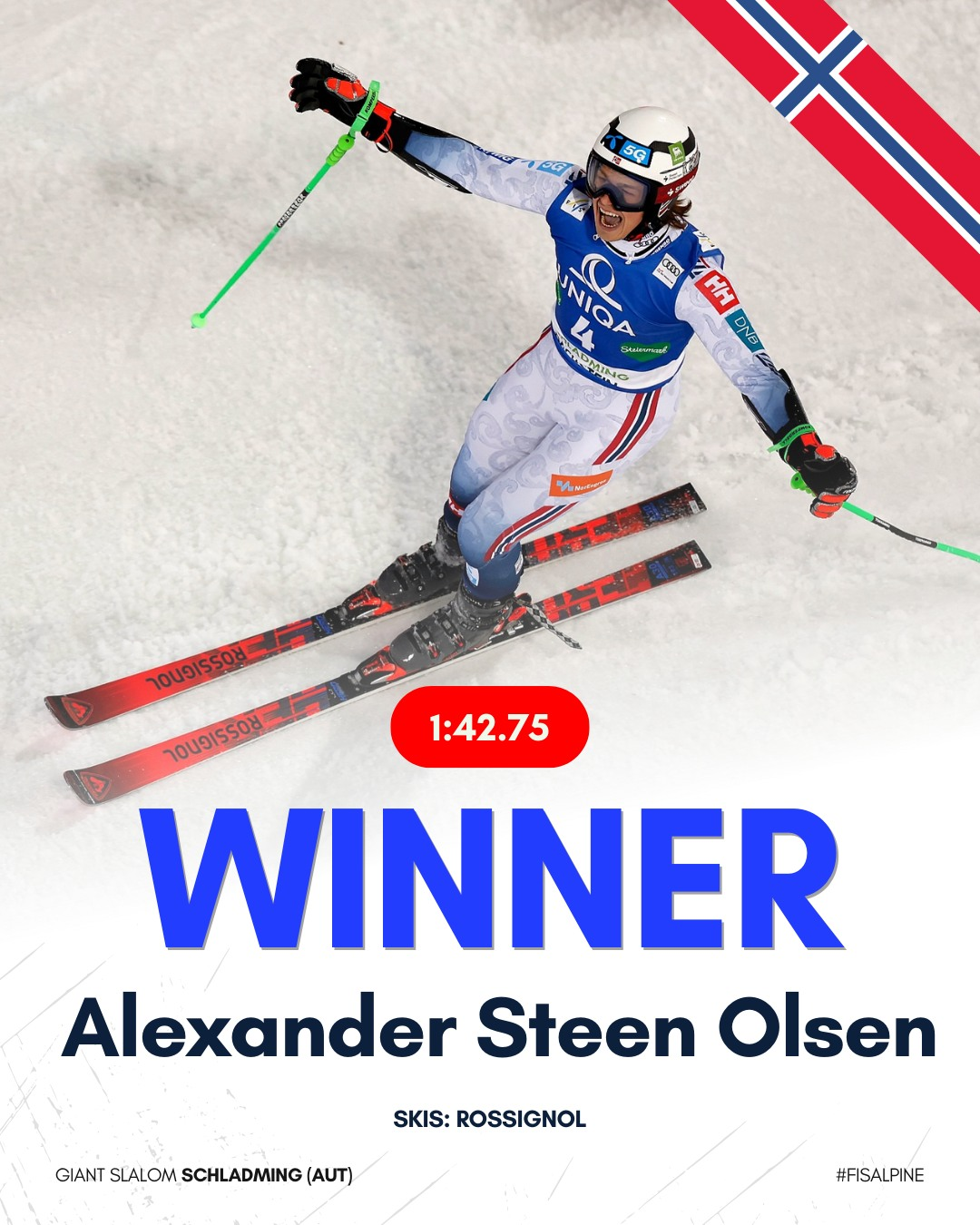
Raindrops were a little smaller and milder in the second run, but still, every racer had to wipe his goggles in the start gate. Marco Odermatt performed a solid run, which was not his best, but it was good enough to take the lead from Joan Verdu (AND). It was not good enough for a win, but good enough for a third place. Then, the Norwegians showed how they love skiing on the salted surface. Henrik Kristoffersen deposed Odermatt, and Alexander Steen Olsen skied down with such energy and determination that he built on his lead. Loic Meillard did not even manage the podium in the end and finished fourth—the final rankings being Olsen first, Kristoffersen second, and Odermatt third.
In the end, everybody was happy. Olsen jumped and cried joyfully for his victory, and Kristoffersen was delighted for his teammate. It is terrific how Henrik changed from the angry young solitary man into a true team leader within the Norwegian team. Odermatt said in the post-race interview that he is content to be on the podium at all. After two weekends on downhill skis, he had only two days of training to switch the mindset and tune into his giant slalom skills. Even for him, it was impossible to demolish the competition under these circumstances.
The Slalom on Wednesday
The course setting of the two runs on Wednesday could not have been more different. The first run was smooth and straight, favored skiers who like to let the skis run. The second run was turny, crazy, varied, and tricky. The real mystery is the intention of the course setters. The first run was set by the Italian coaches, and their favorite, Alex Vinatzer, finished sixteenth. The German coaches set the second run. Wait for the result.
After the first run, Linus Strasser (GER) led by 0,31 seconds, with Timon Haugan, Loic Meillard, and Manuell Feller close in the chase. Henrik Kristoffersen (NOR), who was not very happy with the first run (being two easy, he said), nailed the second run to lead from the ninth place. But that was not enough, and Fabio Gstrein (AUT) soon deposed him to the local fans’ great pleasure. The Schladming arena went wild with singing Alpinpop and waving Austrian flags.
And they could celebrate because neither the slalom tour leader Clement Noel (FRA) nor Atle Lie McGrath (NOR) could topple Gstrein. Only their own could do so. Last year’s slalom tour champion Manuel Feller (AUT) needed this podium before the World Championship in Austrian Saalbach after that terrible season start. He was faster than his teammate and together they waited in the red chair. As Loic Meillard only managed fifth place, Feller began to hope.
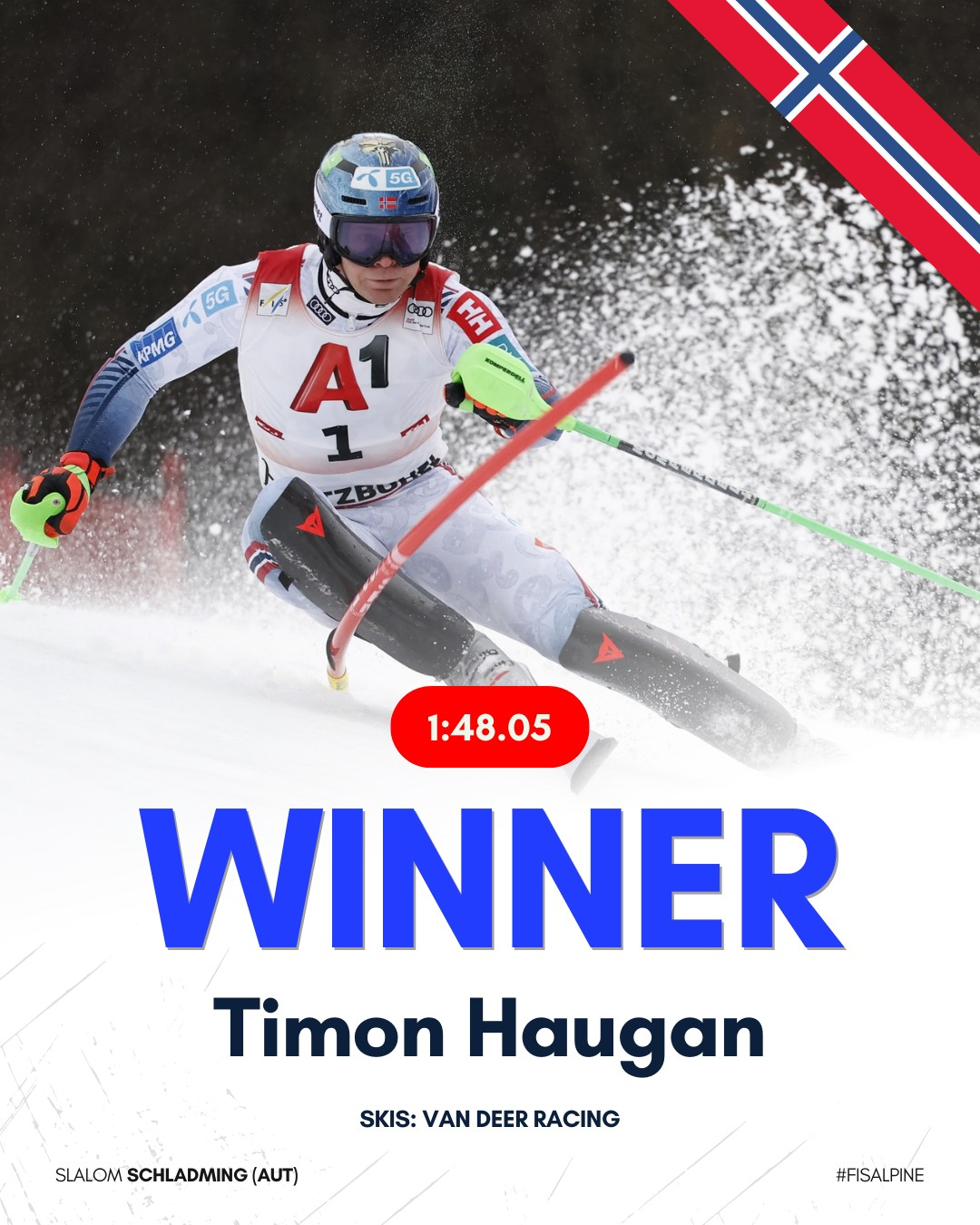
But Timon Haugan’s (NOR) lead was just too big, and Haugan did not fail to deliver in the second run this time. He performed superbly, was faster than Feller, sat in the red chair, and waited, literally biting his Reusch gloves, as Linus Strasser set out to conquer the course set by his coaches.
Strasser sank to the fourth place, complaining bitterly in the post-race interview that the course did not suit his skiing style at all. What did they intend by that? Who knows, but the mood of the German team will not be great after the race.
Timon Haugan won, and the Austrians could celebrate as Manuel Feller returned to the podium with a second place, and Fabio Gstrein got his first World Cup podium, finishing third. One can say that the Austrians won it all, as Timon Haugan races on the Austrian ski brand (Van Deer), and both Feller and Gstrein are Austria’s Atomic skiers.
However, the national cup points are awarded according to the skier’s nationality, not their ski manufacturer.
The night events in Schladming were once more unforgettable. They also foreshadowed the atmosphere we will surely experience next week during the World Championships in Saalbach.