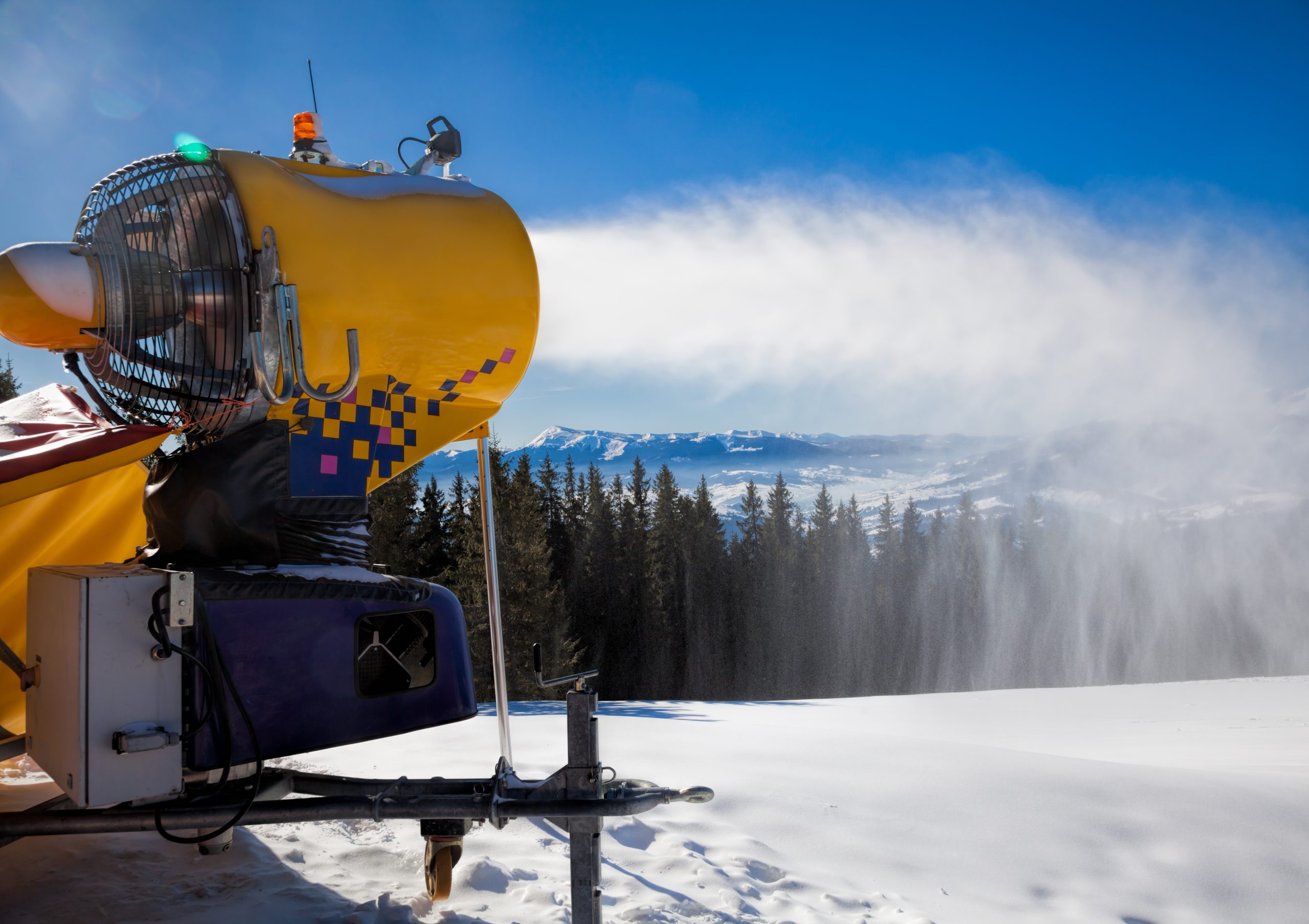
As spring takes over, it is time to appreciate two inventions that make spring ski racing possible: artificial snowmaking and ski waxing.
Snowmaking
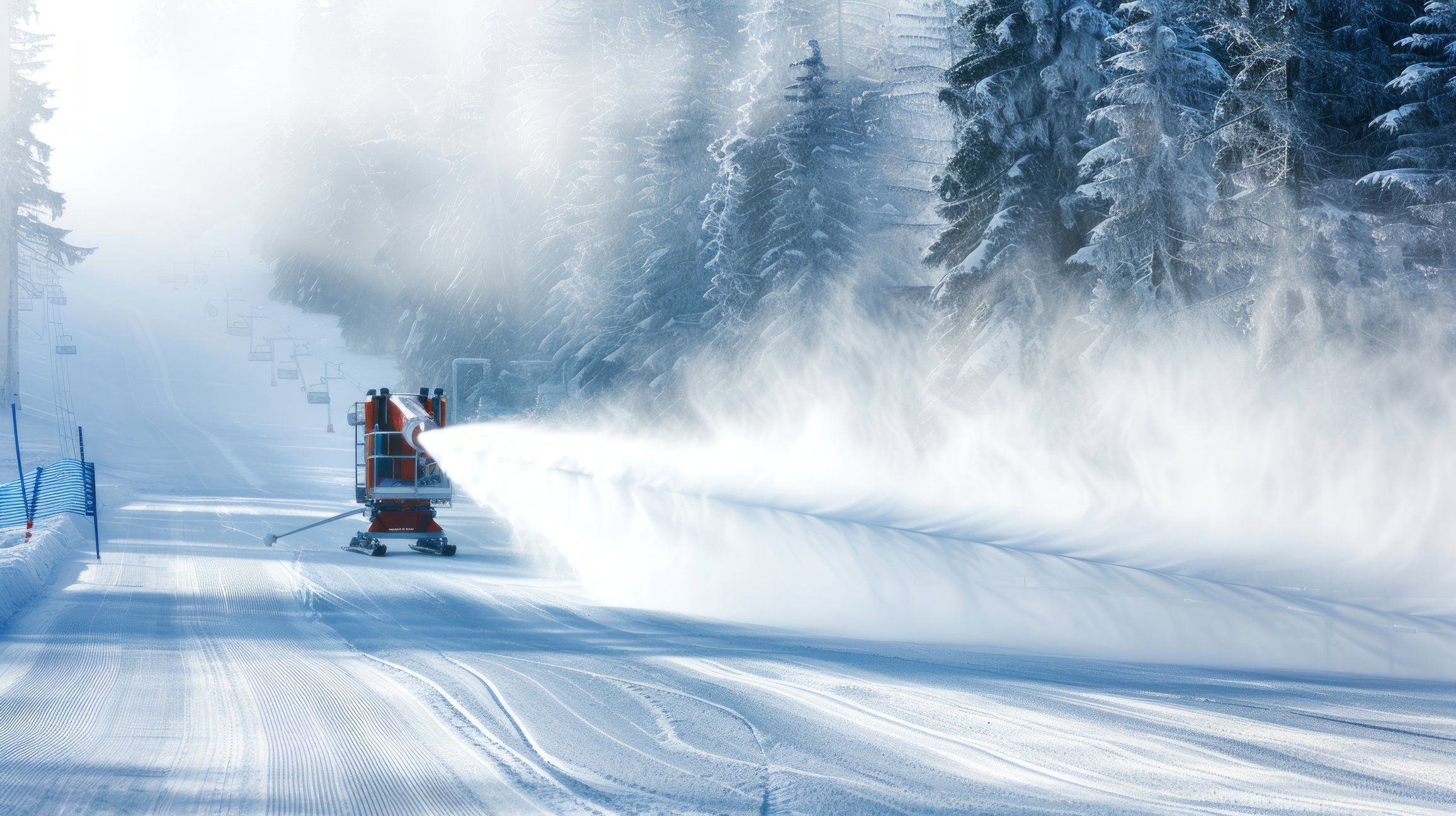
First, let us be clear. Nobody likes skiing on artificial snow. Its aggressive structure is unpleasant, and without nature’s help, ski resorts only end up with sand-like material covering the firm surface. But spring skiing would not be possible without artificial snow, and with nature’s help, artificial snow creates better conditions.
- Related post: It’s Snowing in North Carolina This Winter
How It Works
You cannot have artificial snow in the summer, at least not in any significant amount. It must be very cold, with temperatures close to zero, to make the snow gun work. A dry climate helps; the drier the air, the higher the temperatures allowed. With very humid air, temperatures cannot rise above zero. So, ski resorts always wait anxiously for freezing weather before they can help nature cover the slopes with a white blanket.
However, snowmaking technology is evolving, and different types of artificial snow exist even today. Let’s explore the history and evolution of snowmaking techniques.
History of Snowmaking
The concept of artificial snow dates back to 1934 in Hollywood, California, where Warner Bros. created a blizzard effect for a film by shaving ice blocks and using fans to simulate snowfall. This rudimentary method, however, did not get wider attention.
In the 1940s, Canadian researchers led by Dr. Ray Ringer by chance produced snow while studying ice formation on jet engines. By spraying water near engine intakes, they created ice particles resembling snow.
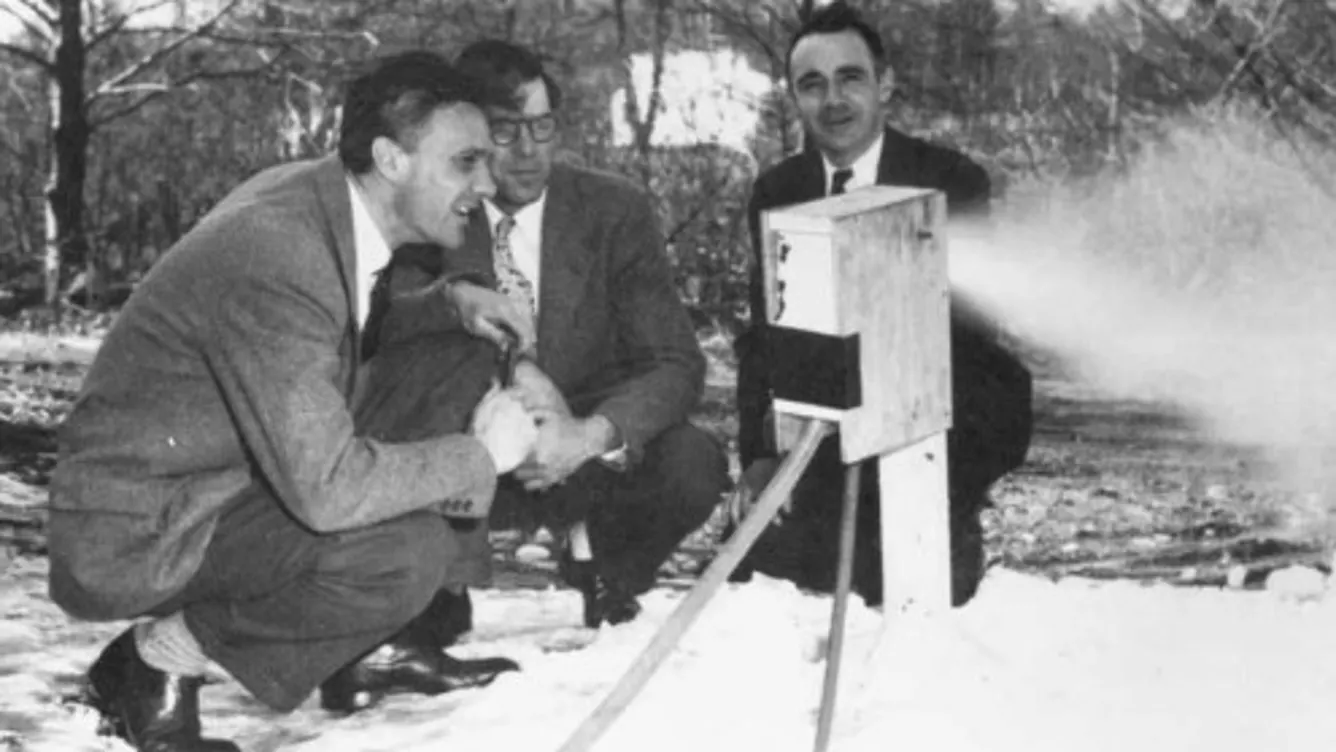
The real journey of artificial snowmaking began in the early 1950s. In 1950, Americans Art Hunt, Dave Richey, and Wayne Pierce invented the snow cannon. Grossinger’s Catskill Resort in New York became the first to utilize artificial snow in 1952.
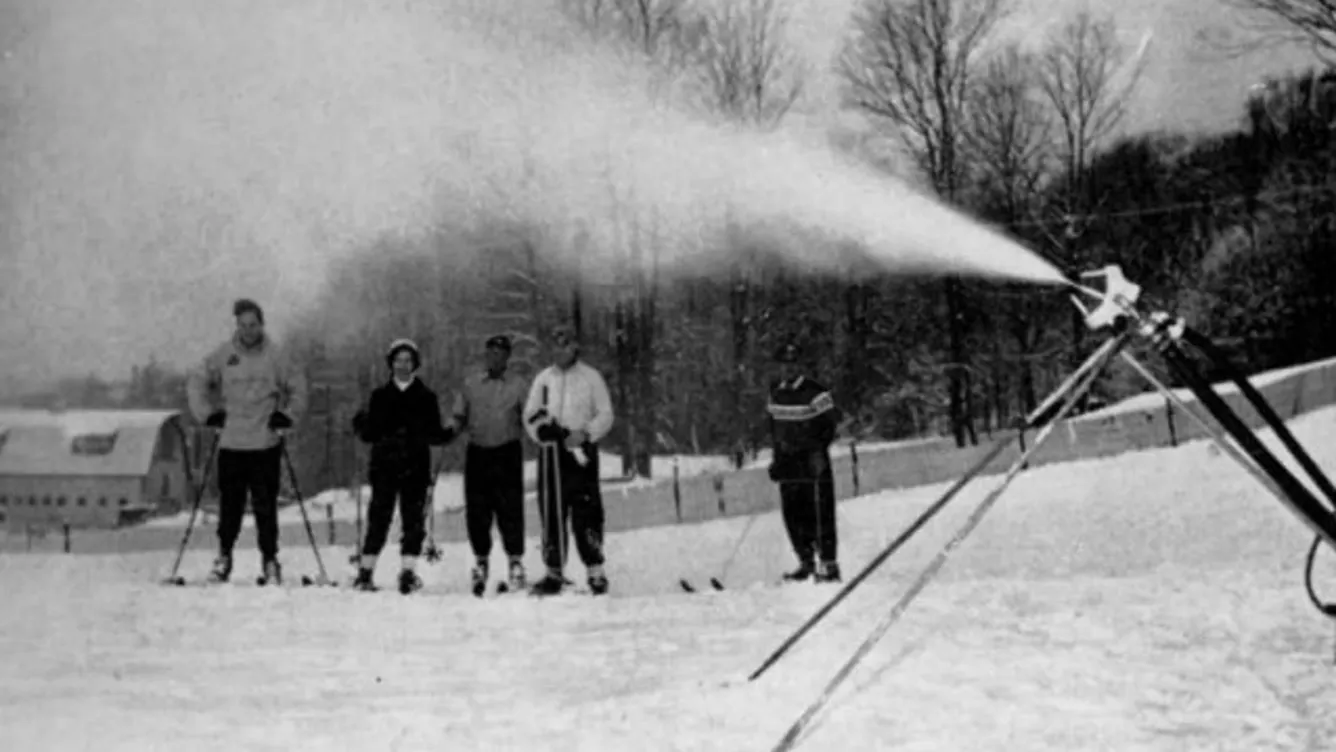
In 1958, Alden Hanson filed a patent for a fan snowmaker, introducing a quieter and more efficient design. Further innovations continued during the 1960s.
However, it took some time before the venues accepted this novelty and before artificial snowmaking entered the stage of alpine ski racing. The first Olympics to feature artificial snow was Lake Placid in 1980. The lack of snow complicated all major skiing events until then in a way we can barely imagine today.
The organizers decided to adopt the snowmaking technology and ensure they had enough snow for the games. They had to fight with the environmentalists in New York State, but in 1979, they finally succeeded in the Whiteface Ski Resort. The construction of a snowmaking system that cost $5 million began.
It proved to be a wise decision. Just in the year of the Olympic Games, the world suffered from the most significant shortage of natural snow since 1887. The athletes were said to be impressed with the quality of the artificial snow. Artificial snow had become one of the symbols of these games. It gained so much interest that visitors took it home in refrigerated cans as a souvenir.
Advancements in Ski Waxing Techniques
Parallel to snowmaking, ski waxing has evolved from basic methods to refined formulas designed to enhance ski performance in unstable snow conditions.
The earliest recorded ski waxing techniques involved using pine tar pitch and rosin to improve glide. In 1673, Johannes Scheffer documented such methods in his work “Argentoratensis Lapponiæ.”
But from these humble origins, waxing went further in the 20th century with the evolution of skiing as a sport.
The introduction of klister in 1913 by Peter Østbye provided skiers with better traction on granular snow, especially under spring conditions.
The technology evolved during the 1940s and 1950s, incorporating paraffin and other compounds. The new wax products were significantly more effective.
Companies like Swix emerged during this period, offering color-coded, temperature-specific waxes that allowed skiers to select products tailored to specific snow conditions.
And Then Fluor Entered the Game
The fluorocarbon additives in waxes were introduced during the 1980s, enhancing water and dirt repellency and significantly improving glide. Hertel Wax, for instance, pioneered all-temperature waxes and held patents for fluorocarbon formulations introduced in 1986.
In the 1980s and 1990s, little worries were voiced about fluorinated compounds.
Concerns began to surface prominently in the early 2000s. Fluorinated compounds, particularly PFAS (per- and poly-fluoroalkyl substances), do not break down in the environment and have been found in snowmelt, rivers, and groundwater near ski areas. These chemicals accumulate over time, contaminating drinking water and harming aquatic life.
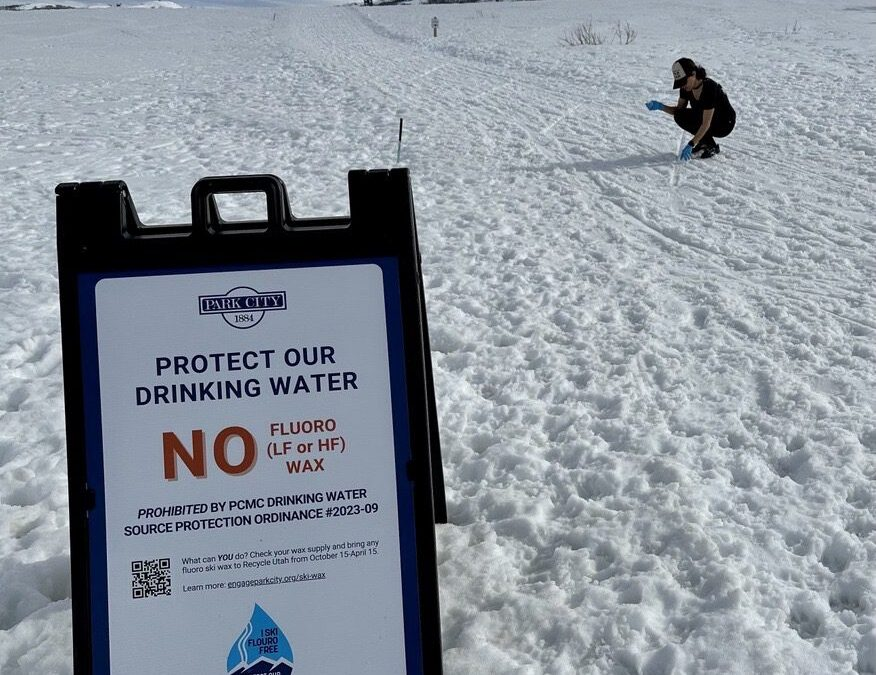
In addition, the fluorinated wax fumes harm the ski technicians who work with them. The health risks include lung damage and increased cancer risks.
Studies on ski technicians who regularly applied fluorinated waxes found dangerously high levels of PFAS in their blood.
So, FIS decided to ban fluorinated ski waxes in 2019. The ban should have taken effect in the 2020-21 season. However, starting prohibition is one thing; the other is enforcement. FIS had to look for a reliable, effective, and fast testing system.
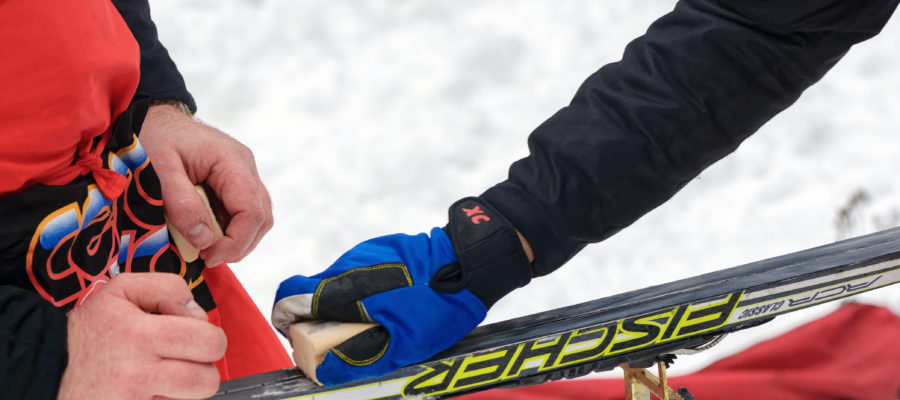
The ban was finally fully implemented for the 2023–24 season, affecting all levels of FIS competition.
To enforce the ban, FIS inspectors use the ALPHA II Ski Wax Analyzer, a Fourier Transform Infrared (FT-IR) spectrometer that detects fluorinated compounds on ski bases. Pre-race inspections are conducted randomly or based on suspicion, and any ski found with fluor wax is immediately disqualified from competing. Additionally, post-race inspections are carried out, and if a ski test positive, the competitor is disqualified (DSQ), and their results are nullified. The FT-IR analyzer provides results in approximately 30 seconds, allowing real-time ban enforcement.
- Related post: The Final Week Before the Show of the Season: On Courchevel, the Canceled Downhill, Shiffrin’s Comeback, and Vonn’s Ideas
Some teams and athletes criticized the ban. They complained that the ban favors big teams and richer athletes, as comparable replacements for the banned waxes are more expensive. Still, the debate persists around the efficiency of the testing methods. There were cases where the athletes issued appeals, and further, more detailed chemical inspection of their skis proved them right. The testing methods are not 100 percent sure.
But we do not hear much about Fluor during the FIS World Cup season, and one can say that the athletes and their technicians learned to live without Fluor.
However, a discussion on this topic might be interesting. And if you have some experience with the issue, we encourage you to share them in the comments. Discussion is always welcome; it moves us forward.